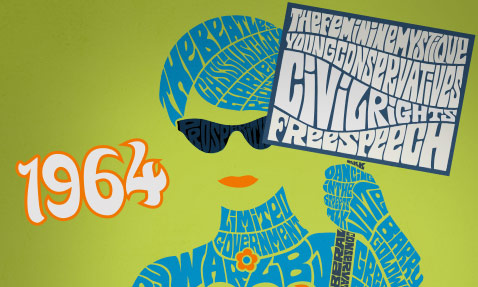
Showing posts with label 1964. Show all posts

Thursday, April 19, 2018

April 19


You finished watching "White Light/Black Rain" today. The film study questions are due on Monday. You should also start working on your Chapter 7 Key Terms and Questions.


You finished off the "Expansion of Economic Globalization" today, and had some class time to work on your Chapter 11 or 12 key terms and questions. The Chapter 11 Key Terms and Questions are due on Monday. You were also given a booklet on the WTO (and IMF and World Bank) that you should read, highlight and annotate. We'll be working with this information next week.


You should have finished "American Experience: 1964" today. You should have taken notes on this video too! Make sure that you're ready for next week's Paper 3 on the Civil Rights Movement (Tuesday, April 24th).


Wednesday, April 18, 2018

April 18


You started the "Expansion of Economic Globalization" PowerPoint lecture today. You had class time to work on either your Chapter 11 or 12 key terms and questions.


You started watching "White Light/Black Rain" today. While you were watching this video, you should have been answering the film study questions. You need to submit those questions on Monday, so they need to be completed on a separate piece of paper.


You started a film study for "American Experience: 1964". As you watched this film, you should have taken notes. You will finish it off tomorrow.

Thursday, April 14, 2016

April 14


You were assigned a U.S. president on Monday to profile in the days and weeks to come. As part of this assignment you are required to make a 5-7 minute film, and then do a presentation in which you defend/present that president's foreign and domestic policy. You'll get some class time tomorrow to work on it. You started watching a documentary of a pivotal year in American history from the American Experience series called "1964".


Your Chapter 7 Key Terms and Questions are due on Monday, April 18th. You watched "Dear America: Letters Home from Vietnam" today.


As we will see, public support for the Vietnam War changes over time as more and more American soldiers are killed. We see a growth in the anti-Vietnam War demonstrations, and the media also played a role in the turn of popular opinion against the war. I REALLY recommend that you have a look at the this series of photographs from the Vietnam War era, pretty powerful imagery (make sure that you read the captions too). Here is a link to the NPR that explains the story behind the photograph below, definitely worth the time to read or listen to the podcast, and make sure that you look at the photo gallery of Eddie Adams' photographs of the Vietnam War.


 There are certain iconic images associated with the Vietnam War. Here is another:


The above photograph is of Phan Thị Kim Phúc, O.Ont (born in 1963), she is a Vietnamese-Canadian best known as the child subject of a Pulitzer Prize winning photograph taken during the Vietnam War on June 8, 1972. The iconic photo taken in Trang Bang by AP photographer Nick Ut shows her at about age nine running naked on the street after being severely burned on her back by a South Vietnamese napalm attack. Contrary to popular myth, the US Air Force were not involved in the attack, and only two US troops were within 60 miles (97 km) of the scene, neither of whom had any say in the bombings. Still, it is a powerful image associated with the war.

I'm posting the study guide for your Chapter 7 Test (Cold War Exam) below. You have a lot of review and studying to do, that's why I'm posting this study guide so far in advance (this test is on April 26th).

It is a multiple choice test with 70-75 multiple choice questions. Please make sure that you have read Chapter 7. Here are some other study tips:
  • study "The Origins of the Cold War (ppt)"
  • study all notes on the Origins and Causes of the Cold War
  • study notes on the Korean War
  • study notes on the Cuban Missile Crisis
  • study notes on the Vietnam War (see notes package and Vietnam War booklet, and the notes that I sent to you on the Vietnam War)
  • make sure that you know all the Cold War Concepts
  • know the chronology of events of the Cold War (study the Cold War timeline and the Vietnam War timeline, and the end of the Cold War timeline that I will be giving you in subsequent class)
  • know key events that we've emphasized in class (for example: Berlin Airlift, Korean War, Cuban Missile Crisis, Vietnam War) plus other key events from the timeline
  • know major arms reduction agreements (bilateral agreements and multilateral agreements), please study the notes that I will give you next week on this topic.
  • know about the formation of alliances (NATO, Warsaw Pact) and the formation of "spheres of influence"
  • anything that I gave you as a handout is testable material and should be reviewed!!
  • know how the Cold War ends and its results/consequences


You were split into two groups today to prepare for tomorrow's debate on the following topic: "Be it resolved that the 21st century will belong to China." This was a debate topic from the Munk Debate series. You can find the link to the Munk Debate on China here. At the Munk Debate site you can read the transcript from the debate. Another interesting link is to check out Hans Rosling's 200 Countries, 200 Years in 4 Minutes. This is interesting to note the development of China and how there is a disparity between different regions in China. And now for a couple of links to videos and stories from Fareed Zakaria's Global Public Square: challenges facing China's leadership, why China's leadership needs a PR overhaul.  To get a closer look at any of the infographics below, right click on the image and open in a new window.

Useful links to prepare for the debate:


below.


This final exam is entirely multiple choice format. There are 57 multiple choice questions. This Unit 2 Final Exam will be on Monday, November 9th. Please make sure that you study your key terms from Unit 2 (Chapters 6-9), as well as the three PowerPoint presentations from this unit:
  • "Historical Globalization and Imperialism"
  • "Legacies of Historical Globalization"
  • "Legacies of Historical Globalization in Canada"

Key Concepts from Unit 2:
  • world views
  • historical globalization
  • cultural contact
  • depopulation
  • the Silk Road
  • international trade
  • mercantilism
  • capitalism
  • free market
  • entrepreneurs
  • Adam Smith
  • exploitation
  • communism
  • industrialization
  • Industrial Revolution
  • cottage industries
  • imperialism
  • "new" imperialism
  • "old" imperialism
  • colony
  • protectorate
  • sphere of influence
  • paternalistic
  • Confederation
  • residential schools
  • the Oka crisis
  • First Nations Policing Policy
  • legacy
  • ethnocentrism
  • Eurocentrism
  • Scramble for Africa
  • Leopold II
  • migration
  • displacement
  • British East India Company
  • Queen Elizabeth I
  • the Raj
  • Mohandas Gandhi
  • swadeshi
  • deindustrialization
  • colonization
  • the Hundred Associates
  • Hudson’s Bay Company
  • Rupert’s Land
  • North West Company
  • Seven Years’ War
  • Proclamation of 1763
  • Quebec Act of 1774
  • the Numbered Treaties
  • the Indian Act
  • Status Indian
  • Non-Status Indian
  • multiculturalism
  • specific claims
  • comprehensive claims

Tuesday, April 15, 2014

April 15


We finished watching the PBS documentary from the American Experience series called "1964" today. Please remember that your film study sheet answers for "1964" are due tomorrow.


I moved on to 1968 for the most part today (and beyond), because we started looking at the Nixon administration. I'll continue my lecture on Richard Nixon tomorrow. Please remember that you have your Paper 3 on the U.S. Civil Rights Movement on Thursday, April 17th. Please check out the past IB exam questions below. Please review your IB command terms!

Here are some possible questions from previous IB Exams:
  • What were the successes of the civil rights movement from 1950-1964 and how were those successes obtained?
  • What were the successes and failures of the civil rights movement between 1954 and 1964?
  • Explain the development of the civil rights movement in the 1950’s.
  • To what degree had it achieved its objectives by the time of the March on Washington in 1963?
  • How were the philosophies and tactics of Dr. Martin Luther King Jr. and Malcolm X different and what caused those differences?
  • Why had the civil rights movement come to dominate national attention by 1964?
  • What impact did the Black Power Movement have on the Civil Rights Movement?
  • Compare and contrast the strategies of Martin Luther King and Malcolm X.
  • What factors contributed to the urban riots post 1964?
  • The civil rights movement had achieved most of its basic goals by 1965. To what degree do agree with that statement?
  • Overall would you characterize the civil rights movement as a unified or dis-unified movement?
  • Evaluate the effectiveness of the NAACP’s strategy from 1950-1968.


I gave you some class time to work on some textbook work from your History of the Americas textbook. You were to read pages 38-47, and complete the chart of page 44 which asked you to draw comparisons between Simon Bolivar, Jose de San Martin and George Washington. I also introduced the fake Facebook page assignment, and the long-term "shadow research" assignment on Latin American countries. Please remember that you are writing your French Revolution and Napoleonic Age test (the Unit 5 Test) on Thursday, April 17th. Please see the study guide here (scroll down to find it).


I finished off the "Foundations of Economic Globalization" PowerPoint lecture today. I also showed you a short video called "Global Economic Issues". I gave you the Unit 3 Worksheet today, your Chapter 10 Key Terms are due tomorrow. I will only be taking in the key terms tomorrow, not your answers to the Chapter 10 questions. One week from today you will be writing your Unit 2 Final Exam. Please see the study guide for this exam below.


This final exam is entirely multiple choice format. There are 57 multiple choice questions. This Unit 2 Final Exam will be on Tuesday, April 22nd. Please make sure that you study your key terms from Unit 2 (Chapters 6-9), as well as the three PowerPoint presentations from this unit:
  • "Historical Globalization and Imperialism"
  • "Legacies of Historical Globalization"
  • "Legacies of Historical Globalization in Canada"
Key Concepts from Unit 2:
  • world views
  • historical globalization
  • cultural contact
  • depopulation
  • the Silk Road
  • international trade
  • mercantilism
  • capitalism
  • free market
  • entrepreneurs
  • Adam Smith
  • exploitation
  • communism
  • industrialization
  • Industrial Revolution
  • cottage industries
  • imperialism
  • "new" imperialism
  • "old" imperialism
  • colony
  • protectorate
  • sphere of influence
  • paternalistic
  • Confederation
  • residential schools
  • the Oka crisis
  • First Nations Policing Policy
  • legacy
  • ethnocentrism
  • Eurocentrism
  • Scramble for Africa
  • Leopold II
  • migration
  • displacement
  • British East India Company
  • Queen Elizabeth I
  • the Raj
  • Mohandas Gandhi
  • swadeshi
  • deindustrialization
  • colonization
  • the Hundred Associates
  • Hudson’s Bay Company
  • Rupert’s Land
  • North West Company
  • Seven Years’ War
  • Proclamation of 1763
  • Quebec Act of 1774
  • the Numbered Treaties
  • the Indian Act
  • Status Indian
  • Non-Status Indian
  • multiculturalism
  • specific claims
  • comprehensive claims

Monday, April 14, 2014

April 14


We started a documentary from the PBS series "American Experience: 1964" today. I gave you a film study sheet to go along with the video that you need to complete for Wednesday. We'll continue this documentary tomorrow. Please remember that you are writing a Paper 3 on the Civil Rights Movement unit on Thursday.

Here are some possible questions from previous IB Exams:
  • What were the successes of the civil rights movement from 1950-1964 and how were those successes obtained?
  • What were the successes and failures of the civil rights movement between 1954 and 1964?
  • Explain the development of the civil rights movement in the 1950’s.
  • To what degree had it achieved its objectives by the time of the March on Washington in 1963?
  • How were the philosophies and tactics of Dr. Martin Luther King Jr. and Malcolm X different and what caused those differences?
  • Why had the civil rights movement come to dominate national attention by 1964?
  • What impact did the Black Power Movement have on the Civil Rights Movement?
  • Compare and contrast the strategies of Martin Luther King and Malcolm X.
  • What factors contributed to the urban riots post 1964?
  • The civil rights movement had achieved most of its basic goals by 1965. To what degree do agree with that statement?
  • Overall would you characterize the civil rights movement as a unified or dis-unified movement?
  • Evaluate the effectiveness of the NAACP’s strategy from 1950-1968.


I continued with the "Foundations of Economic Globalization" PowerPoint lecture today, I should be able to finish that lecture off tomorrow. On April 22nd, you will be writing your Unit 2 Final Exam, I will post the study on the blog tomorrow.


We started looking at Latin American revolutions today. The PowerPoint presentation that I went through today is on the IB 20 wiki under Unit 4: Independence Movements. Please remember to bring your History of the Americas textbook to class tomorrow. Please remember that you're writing your Unit 5 Test on Thursday, please see the study guide here (scroll down to find it). I'll do a session on Paper 1 tomorrow in tutorial.