Showing posts with label presidential system. Show all posts

Tuesday, November 26, 2019

November 26


We watched the A & E Biography of Benito Mussolini today. We also finished off the lecture that I started yesterday on Italian foreign policy. For homework tonight, please read pages 119-129 in The Move to Global War textbook, and complete a ranking (and rationale) of the international responses to the Abyssinian crisis, from most severe response to least severe response. It would probably be best to do this in a chart.


There are some important key dates coming up in the course:

  • Unit 2 WRA II Essay is on Monday, December 2nd (one week from yesterday)
  • Chapter 7-8 Test is on Tuesday, December 3rd (please see the study guide below) 
  • Unit 2 Final Exam is on Monday, December 9th (the study guide will be posted on the blog on December 2nd)
You had time to work on your Chapter 8 Key Terms and Questions today, since they are due on Thursday. I also did a homework check on the Chapter 7 Key Terms and Questions and the "Shake Hands with the Devil" film study questions. 


This test is on Tuesday, December 3rd. It will consist of 20-24 key terms in a matching section, and 3-4 short answer questions. Please study the following PowerPoint presentations:
  • "The Holocaust" (this is posted on the wiki, and it's in your course books)
  • "8 Stages of Genocide" (it's also posted on the wiki)
  • "Contemporary Examples of Genocide" (this is posted on the wiki, and it's in your course books)

Please study the following notes packages/film study packages:
  • 36 Questions About The Holocaust  
  • White Light/Black Rain (film notes)
  • Shake Hands with the Devil (film notes + package)
  • Unit 2 Worksheet (chapter questions for Chapter 7 and 8)
  • make sure that you have read Chapters 7 and 8!

1. Please study the following key concepts/key people/key events:
genocide:

  • crimes against humanity
  • war crimes
  • the Holocaust
  • ethnic cleansing
  • lebensraum
  • Weimar Republic
  • Final Solution
  • decolonization
  • successor state
  • self-determination
  • Wansee Conference
  • Nuremberg Trials
  • Hutu
  • Tutsi
  • Romeo Dallaire
  • Manhattan Project
  • Hiroshima
  • Nagasaki
  • Robert Oppenheimer
  • FDR
  • Harry Truman
  • Potsdam Conference
  • Slobodan Milosevic


2. You should be able to answer any of the questions from the Unit 2 worksheet on Chapter 7 or 8.


We continued studying Unit 3 material today. I shared the Chapter 10 Google Doc with the class today. Start working on it! We also looked types of democratic systems (namely parliamentary systems and presidential systems), as well as the structure of Canadian government.

Tuesday, November 13, 2018

November 13


We looked at differences between the parliamentary system and the presidential system, and then we went through the U.S. government structure. I showed a couple of videos on the electoral college system today as well.


We went through the factors that contributed the expansion of economic globalization today. Please check your results in PowerSchool for the Unit 2 Final Exam.

We finished watching "Good Night, and Good Luck" today in class. This film explores a lot of issues that are relevant to today. You also have to understand the political climate at the time in the United States to fully understand the movie. Many Americans were drawn to communism in the 1930s due to the effects of the Great Depression, especially academics and those in the labour fields. In the movie they made reference to friends and spouses that had attended meetings long ago. The "Red Scare" caused a huge backlash against those sympathetic to communism or the USSR. Remember, during WWII the Soviet Union was an ally, and many people may have attended meetings out of curiosity. The junior Senator from Wisconsin, Joseph McCarthy in 1950 charged there were communist sympathizers in the U.S. State Department. Hearings were held, charges were discovered to be unfounded. McCarthy continued accusing communist infiltration in the Democratic Party. McCarthy became the chairman of the House Subcommittee on the investigation of un-American activity (HUAC). On December 2, 1954, McCarthy’s actions were called into question and his accusations were deemed unfounded. On Murrow's show "See it Now", he begins to publicly go after McCarthy. A very public feud develops when McCarthy responds by accusing Murrow of being a communist. Murrow is accused of having been a member of the leftist union Industrial Workers of the World, which Murrow claimed was false.
In this climate of fear and reprisal (which we now refer to as McCarthyism), the CBS crew carries on and their tenacity ultimately strikes a historic blow against McCarthy. Historical footage in the movie also shows the questioning of Annie Lee Moss, a Pentagon communication worker accused of being a communist based on her name appearing on a list seen by an FBI infiltrator of the American Communist Party. In the first half of the film Murrow talks about how McCarthy didn't create the political climate and anti-Communist hysteria sweeping the country, but that he capitalized on it for political gain very effectively. As David Strathairn (playing Murrow in the film says, "We will not walk in fear, one of another. We will not be driven by fear into an age of unreason if we dig deep in our history and doctrine and remember that we are not descended from fearful men, not from men who feared to write, to speak, to associate and to defend causes which were, for the moment, unpopular. We can deny our heritage and our history, but we cannot escape responsibility for the result. There is no way for a citizen of the Republic to abdicate responsibility." The film is framed by the performance of the speech given by Murrow to the Radio and Television News Directors Association in 1958, in which Murrow harshly admonishes his audience not to squander the potential of television to inform and educate the public. I found this short video on YouTube that spliced together Edward R. Murrow's speech that appears at the beginning of the film and continues at the end of the film. I find that this speech has relevance even today when you talk about the level of discourse in the media.

Another concept that you should become familiar with is demagoguery. Here's a definition of demagoguery: Political activity or practices that seek support by appealing to the desires and prejudices of ordinary people rather than by using rational argument.


It is a multiple choice test with 70-75 multiple choice questions, but with all of the omitted questions, it will be closer to 60 questions. Please make sure that you have read Chapter 7. Here are some other study tips:
  • study "The Origins of the Cold War (ppt)"
  • study all notes on the Origins and Causes of the Cold War
  • study notes on the Korean War
  • study notes on the Cuban Missile Crisis
  • study notes on the Vietnam War (see notes package and Vietnam War booklet, and the notes that I sent to you on the Vietnam War)
  • make sure that you know all the Cold War Concepts (deterrence, detente, brinkmanship, etc.)
  • know the chronology of events of the Cold War (study the Cold War timeline)
  • know key events that we've emphasized in class (for example: Berlin Airlift, Korean War, Cuban Missile Crisis, Vietnam War) plus other key events from the timeline
  • know major arms reduction agreements (bilateral agreements and multilateral agreements)
  • know about the formation of alliances (NATO, Warsaw Pact) and the formation of "spheres of influence" (Eastern Europe for example)
  • anything that I gave you as a handout in your Social 30-1 coursebooks is testable material and should be reviewed!!
  • know how the Cold War ends and its results/consequences

Tuesday, November 15, 2016

November 15


You spent most of this class in the library doing preliminary research on your chosen topic for your Unit 2 Dossier Assignment. If you are in my Period 1 class, we had to spend some time drawing lots and drafting topics, but you still had some time to find some books in the library and get some work done today. This will be the only class period that you will get to work on this assignment. Your Unit 2 Dossier Assignments will be due on Tuesday, December 6th.

This should help Social 20-1 students who are working on their Unit 2 Dossier Assignments. Of course, if you use Chicago or MLA, the citations may look different. 


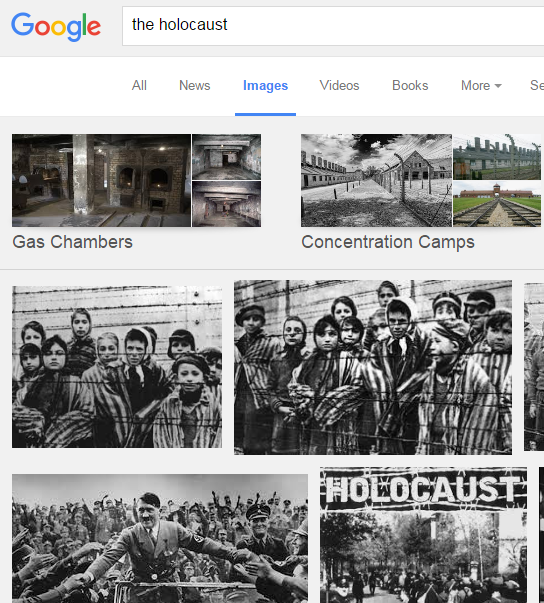
Most of you will probably use Google for your image search. Just type in your image search term. I typed in The Holocaust. 


A bunch of different images will pop up. Just click on one that you like. I clicked on the first image and a pop-up screen will show you the image more closely. 


Click on "View Image". In the address bar you will see a specific URL for the image. This is what you need for your image citation. It should end in either .jpg or .png. or .svg or some other file extension that indicates that it is an image file. 


If you're working in Microsoft Word, click on the References tab. You can select the Style of citation here (MLA, Chicago, APA, etc.). If you need to insert an in-tezt citation, you click on Insert Citation. If you want to start building a Bibliography, you can Insert Citation or Manage Sources. 


You'll get a pop-up dialogue box like the one pictured below. I filled in the fields for the image that I picked. There are also online citation machines available as well, such as EasyBib (http://www.easybib.com/)


We continued our examination of the different types of democratic systems today by looking at the presidential system in greater detail.

Friday, July 22, 2016

July 22


You wrote your Unit 2 Final Exam today. Please remember that your Unit 2 WRA II Essay is on Monday, so you should be preparing for this essay today after school. Your Chapter 10 Key Terms and Questions are due on Monday, July 25th. You'll also be writing your Chapter 10 Test on Tuesday, July 26th. You need to go through the remainder of the "Political Challenges to Liberalism" PowerPoint presentation that is on the wiki under Unit 3, after all you have a test tomorrow, the Chapter 10 Test, and in the study guide it is recommended that you study this presentation. I had you read a little in class about the"Modern History of China" (please finish this reading). If you want to know more about China's rise as an economic superpower you should read the "Road to Prosperity" article from the New York Times that is in your 30-1 study booklets on pages 236-242. We watched a couple of videos from the BBC 20th Century History series: "One Man's Revolution" and "China Since Mao". You had some class time to get some work done as well today.Please see the list of upcoming important dates below. 

We covered the structure of the Canadian and American government, in other words, the differences between the parliamentary and presidential democracies. You might want to have another look at the electoral college system as well, especially since you are doing a comparative government assignment on the American presidential democracy.


  • Unit 2 WRA II Essay is on Monday, July 25th
  • Chapter 10 Key Terms and Questions are due on July 25th
  • Chapter 10 Test is on Tuesday, July 26th (please see the study guide below)
  • Unit 3 WRA I is on Wednesday, July 27th
  • USA-Canada Comparative Government Assignment is due on July 25th
  • Chapter 9 Key Terms are due on July 26th
  • Unit 3 Final Exam is on Wednesday, July 27th (please see the study guide below)
  • U.S. Civil Rights Movement Assignment (questions 1-14) is due on Tuesday, July 26th
  • Chapter 11 Key Terms and Questions are due on July 27th
  • Chapter 12 Key Terms and Questions are due on July 28th
  • Social Studies 30-1 Trial Final Exam is on Thursday, July 28th (last day of classes)


This test is multiple choice format, with 55 questions. Please review the PowerPoint "Political Challenges to Liberalism". You're responsible for all key terms and questions from the Chapter 10 Worksheet. Please review the following as well: 
  • Democratic Systems (handout notes)
  • Non-Democratic Systems (handout notes)
  • Structure of Canadian Government
  • Structure of American Government
  • similarities/differences between the parliamentary system and presidential system
  • types of dictatorships
  • techniques of dictatorships
  • authoritarian systems
  • proportional representation concept
  • first past the post system
  • review political and economic spectrum (again!)


Please study the following material: 
  • make sure that you have read Chapters 9-12 in Perspectives on Ideology
  • study all key concepts from the Chapters 9-12 Worksheets (see below)
  • study all questions/answers from the Chapters 9-12 Worksheets
  • "Political Challenges to Liberalism" (PowerPoint presentation)
Review the following notes/packages:
  • Democratic Systems
  • Non-Democratic Systems
  • types of dictatorships
  • techniques of dictatorships
  • Civil Rights Movement
  • authoritarian systems (China notes)
  • review the economic and political spectrum (again!)
  • re-read the notes on rights that I put on the board (Charter of Rights and Freedoms to War Measures Act)
  • FLQ Crisis 1970
Know the following key concepts/key events/key terms/key people:
  • assimilation
  • self-interest
  • humanitarianism
  • Indian Act
  • residential school system
  • enfranchisement
  • the White Paper
  • the Red Paper
  • “war on terror"
  • authoritarianism
  • consensus decision-making
  • direct democracy
  • military dictatorship
  • oligarchy
  • one-party state
  • party solidarity
  • representation by population
  • proportional representation
  • representative democracy
  • responsible government
  • democracy
  • single-member constituency (first past the post)
  • the Senate
  • the House of Commons
  • the House of Representatives
  • the Senate
  • mixed-member proportional system
  • lobby groups
  • American Bill of Rights
  • Anti-Terrorism Act
  • Canadian Charter of Rights and Freedoms
  • emergency and security legislation
  • illiberal
  • language legislation
  • Bill 101
  • Bill 178
  • Bill 86
  • Quebec Charter of Human Rights and Freedoms
  • respect for law and order
  • terrorism
  • rendition
  • the War Measures Act
  • enemy aliens
  • internment
  • the Emergencies Act
  • USA PATRIOT Act
  • consumerism
  • environmental change
  • extremism
  • pandemics
  • postmodernism
  • global warming
  • Kyoto Protocol
  • World Health Organization (WHO)
  • drought

Thursday, July 23, 2015

July 23


You wrote your Unit 2 WRA II Essay today in the Blenheim Room. I'd like to have these marked by Monday. I went through the separation of powers and checks and balances in the American presidential system. You need to go through/study the "Political Challenges to Liberalism" PowerPoint presentation that is on the wiki under Unit 3, after all you have a test tomorrow, the Chapter 10 Test, and in the study guide it is recommended that you study this presentation. I had you read a little in class about the "Modern History of China" (please finish this reading). If you want to know more about China's rise as an economic superpower you should read the "Road to Prosperity" article from the New York Times that is in your 30-1 study booklets on pages 236-242. We watched a couple of videos from the BBC 20th Century History series: "One Man's Revolution" and "China Since Mao". You had some class time to get some work done as well today.


  • Chapter 10 Key Terms and Questions are due on July 24th
  • Chapter 10 Test is on Friday, July 24th (please see the study guide below)
  • Unit 3 WRA I is on Monday, July 27th
  • USA-Canada Comparative Government Assignment is due on July 27th
  • Chapter 9 Key Terms are due on July 27th
  • Unit 3 Final Exam is on Tuesday, July 28th (please see the study guide below)
  • U.S. Civil Rights Movement Assignment (questions 1-14) is due onTuesday, July 28th
  • Chapter 11 Key Terms and Questions are due on July 28th
  • Chapter 12 Key Terms and Questions are due on Wednesday, July 29th
  • Social Studies 30-1 Trial Final Exam is on Thursday, July 30th (last day of classes)


This test is multiple choice format, with 55 questions. Please review the PowerPoint "Political Challenges to Liberalism". You're responsible for all key terms and questions from the Chapter 10 Worksheet. Please review the following as well: 
  • Democratic Systems (handout notes)
  • Non-Democratic Systems (handout notes)
  • Structure of Canadian Government
  • Structure of American Government
  • similarities/differences between the parliamentary system and presidential system
  • types of dictatorships
  • techniques of dictatorships
  • authoritarian systems
  • proportional representation concept
  • first past the post system
  • review political and economic spectrum (again!)


Your Unit 3 Final Exam will be on Tuesday, July 28th. 
Please study the following material: 
  • make sure that you have read Chapters 9-12 in Perspectives on Ideology
  • study all key concepts from the Chapters 9-12 Worksheets (see below)
  • study all questions/answers from the Chapters 9-12 Worksheets
  • "Political Challenges to Liberalism" (PowerPoint presentation)
Review the following notes/packages:
  • Democratic Systems
  • Non-Democratic Systems
  • types of dictatorships
  • techniques of dictatorships
  • Civil Rights Movement
  • authoritarian systems (China notes)
  • review the economic and political spectrum (again!)
  • re-read the notes on rights that I put on the board (Charter of Rights and Freedoms to War Measures Act)
  • FLQ Crisis 1970
Know the following key concepts/key events/key terms/key people:
  • assimilation
  • self-interest
  • humanitarianism
  • Indian Act
  • residential school system
  • enfranchisement
  • the White Paper
  • the Red Paper
  • “war on terror"
  • authoritarianism
  • consensus decision-making
  • direct democracy
  • military dictatorship
  • oligarchy
  • one-party state
  • party solidarity
  • representation by population
  • proportional representation
  • representative democracy
  • responsible government
  • democracy
  • single-member constituency (first past the post)
  • the Senate
  • the House of Commons
  • the House of Representatives
  • the Senate
  • mixed-member proportional system
  • lobby groups
  • American Bill of Rights
  • Anti-Terrorism Act
  • Canadian Charter of Rights and Freedoms
  • emergency and security legislation
  • illiberal
  • language legislation
  • Bill 101
  • Bill 178
  • Bill 86
  • Quebec Charter of Human Rights and Freedoms
  • respect for law and order
  • terrorism
  • rendition
  • the War Measures Act
  • enemy aliens
  • internment
  • the Emergencies Act
  • USA PATRIOT Act
  • consumerism
  • environmental change
  • extremism
  • pandemics
  • postmodernism
  • global warming
  • Kyoto Protocol
  • World Health Organization (WHO)
  • drought