Showing posts with label Social 10-1 Chapter 3-4 Test Study Guide. Show all posts

Friday, February 28, 2020

February 28


You wrote the Paper 2 on the origins of the Cold War today. Obviously, I won't be marking this Paper 2 right away.


You had time to work on your Chapter 4 Key Terms and Activities today.


You had time to work on your Chapter 5 Key Terms and Questions today. Please remember that you have the Unit 1 WRA I on Monday, and the Chapter 3-4 Test on Tuesday.

This test will be written on Tuesday, March 3rd. It is a matching test with a long answer section. 
  • Know the key terms from Chapter 3-4
  • Be able to answer the Questions for Inquiry in Chapters 3-4 (they appear on p.49, p.53, p.58, p.73, p.80)
  • Know relevant case studies from Chapters 3-4: the Francophones, the Aborigines and the Lubicon, as well as other relevant examples related to assimilation, marginalization, accommodation and integration

Thursday, February 27, 2020

February 27


You finished off watching "Bend it Like Beckham" today. The film study booklet is due on Friday. On Monday, you're writing the Unit 1 WRA I. On Tuesday, you're writing the Chapter 3-4 Test, please see the study guide below.

This test will be written on Tuesday, March 3rd. It is a matching test with a long answer section. 
  • Know the key terms from Chapter 3-4
  • Be able to answer the Questions for Inquiry in Chapters 3-4 (they appear on p.49, p.53, p.58, p.73, p.80)
  • Know relevant case studies from Chapters 3-4: the Francophones, the Aborigines and the Lubicon, as well as other relevant examples related to assimilation, marginalization, accommodation and integration


You went through the Private Enterprise Notes on pages 57-59 in the Social 30-1 course books and the Emergence of Welfare Capitalism and Modern Liberalism notes on pages 60-61 as well today. You had class time to work on your Chapter 4 Key Terms and Activities.

IB 30/35


You finished off the Korean War Google Slides lecture today. You should also watch the CNN episode on the Korean War. You're writing the Paper 2 on the origins of the Cold War tomorrow.


Tuesday, September 25, 2018

September 25


We finished off the "Revolution" episode of America: The Story of Us today, and then I also showed you a video from the U.S. History series called "The American Revolution". You might want to also check out the Crash Course in American History video below as well. We just started talking about the Declaration of Independence at the end of the class too. We'll talk more about this founding document and others tomorrow and in the days to come. Please bring your History of the Americas textbook to class tomorrow as well.


You wrote your Chapter 1-2 Test today. You're writing your Chapter 3-4 Test on Thursday (please see the study guide below). You should have also handed in your "Bend it Like Beckham" film study booklets as well today.

This test will be written on Thursday, September 27th. It is a matching test with a long answer section. 

  • Know the key terms from Chapter 3-4
  • Be able to answer the Questions for Inquiry in Chapters 3-4 (they appear on p.49, p.53, p.58, p.73, p.80)
  • Know relevant case studies from Chapters 3-4: the Francophones, the Aborigines and the Lubicon, as well as other relevant examples related to assimilation, marginalization, accommodation and integration


We continued looking at preparing for the Unit 1 WRA II Essay by looking at what I call the "recipe for success". We'll be doing more essay preparation tomorrow for Thursday's Unit 1 WRA II Essay.

Thursday, September 20, 2018

September 20


I continued lecturing on the American Revolution today, I should be able to finish off the lecture next week. I gave you some light reading to do out of your History of the Americas textbook as well. Don't forget Phase I of the IA is due on Monday, September 24th.
I gave you a work period to try and cut down on your homework for this weekend. Your Chapter 3 Key Terms and Questions are due on Monday. Next week's focus is on preparing you for the Unit 1 WRA II Essay, which you will write on Thursday.

We continued our film study of"Bend it Like Beckham". We'll finish this movie off on Monday, and the so the film study booklet will be due on Tuesday. Please see the study guides for the Chapter 1-2 Test and the Chapter 3-4 Test below. Don't forget that your universalization and hybridization infographic assignment is due on Monday, September 24th. You could of course make your infographic using a web-based program. Here are some suggested websites for doing this: 
   
This test is on Tuesday, September 25th.
  1. Study your Chapter 1 and 2 Key Terms
  2. Review the case studies from the textbook in Chapters 1 and 2, specifically the Metis, the Francophones, the Hmong, and the Maori
  3. Be prepared to answer any of the "Questions for Inquiry" from Chapters 1 and 2 (they are on the following pages: p.9, p.14, p.20, p.29, p.35, p.39):
  • How does globalization affect economic aspects of people's lives?
  • How does globalization affect social aspects of people's lives?
  • How does globalization affect political aspects of people's lives?
  • What is the difference between individual and collective identity?
  • What is the relationship between identity and language?
  • How does cultural exchange shape people's identities?
4. Make sure that you can answer the questions from the Unit 1 Worksheet for these chapters.


This test will be written on Thursday, September 27th. It is a matching test with a long answer section. 

  • Know the key terms from Chapter 3-4
  • Be able to answer the Questions for Inquiry in Chapters 3-4 (they appear on p.49, p.53, p.58, p.73, p.80)
  • Know relevant case studies from Chapters 3-4: the Francophones, the Aborigines and the Lubicon, as well as other relevant examples related to assimilation, marginalization, accommodation and integration


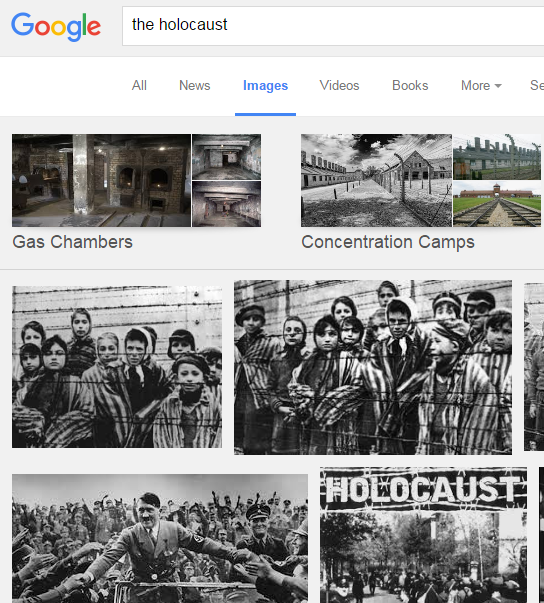
Most of you will probably use Google for your image search. Just type in your image search term. I typed in The Holocaust. 


A bunch of different images will pop up. Just click on one that you like. I clicked on the first image and a pop-up screen will show you the image more closely. 


Click on "View Image". In the address bar you will see a specific URL for the image. This is what you need for your image citation. It should end in either .jpg or .png. or .svg or some other file extension that indicates that it is an image file. 


If you're working in Microsoft Word, click on the References tab. You can select the Style of citation here (MLA, Chicago, APA, etc.). If you need to insert an in-text citation, you click on Insert Citation. If you want to start building a Bibliography, you can Insert Citation or Manage Sources.


You'll get a pop-up dialogue box like the one pictured below. I filled in the fields for the image that I picked. There are also online citation machines available as well, such as EasyBib (http://www.easybib.com/)


Thursday, March 01, 2018

March 1


I went through a lecture on "The Causes of World War I" today in class. Please make sure that you do the reading on the causes of World War I that is in your blue study booklets (pages 85-97) by Monday's class. Next week, you have two assessments while I'm away. You're writing the Chapter 3-4 Test on Tuesday, March 6th and the Unit 1 Final Exam on Wednesday, March 7th, please see the study guides for both of these exams below.

This quiz will be on Tuesday, March 7th. It will consist of a matching section (10 key concepts) and a short answer section.
  • make sure that you study the PowerPoint presentation "Contending Loyalties"
  • make sure that you have read Chapters 3 and 4 (it is all testable material)
  • know the key concepts/key terms from Chapters 3 and 4 (please see the Unit 1 Worksheet for these)
  • study your answers to the Chapter 3 and 4 questions from the Unit 1 Worksheet (all could potentially be on the quiz)


Make sure that you have read Chapters 1-4 in Exploring Nationalism. Please make sure that you know the key concepts from Unit 1 (see below). Also review the PowerPoint presentations that you should have in your notes. They are also on the Social 20-1 wiki under Unit 1 Presentations.
These are the presentations that you should review:

  1. Nation and Identity
  2. The French Revolution
  3. The Napoleonic Age
  4. Contending Loyalties
  • nation
  • nation-state
  • nationalism
  • patriotism
  • self-determination
  • sovereignty
  • sovereign
  • civic nation
  • civic nationalism
  • ethnic nationalism
  • collective consciousness
  • French Revolution
  • Estates-General
  • Louis XVI
  • First Estate
  • Second Estate
  • Third Estate
  • cahiers de doléances
  • Ancien Régime
  • bourgeoisie
  • feudal system
  • philosophes
  • Declaration of the Rights of Man
  • National Assembly
  • Tennis Court Oath
  • constitutional monarchy
  • Jacobins
  • Girondins
  • National Convention
  • levée en masse
  • Robespierre
  • Danton
  • Marat
  • Reign of Terror
  • Napoleon
  • Napoleonic Code
  • Continental System
  • contending loyalties
  • cultural pluralism
  • reasonable accommodation
  • sovereignists
  • federalists
  • royal commission
  • expressions of nationalism
  • non-nationalist loyalty
  • alienation
  • segregation


I split you into two groups today so you can start to prepare for next Tuesday's debate on the following topic: BIRT globalization benefits the world's cultures. I recommend that you set up Google Doc groups to share your research with one another. Please check the Social 10-1 wiki page called 1st Debate to see the teams. Please decide how you will be delivering your speeches during the debate. Please be ready for tomorrow's Chapter 3-4 Test (the study guide is posted below).


This test will be written on Friday, March 2nd. It is a matching test with a long answer section. 


  • Know the key terms from Chapter 3-4
  • Be able to answer the Questions for Inquiry in Chapters 3-4 (they appear on p.49, p.53, p.58, p.73, p.80)
  • Know relevant case studies from Chapters 3-4: the Francophones, the Aborigines and the Lubicon, as well as other relevant examples related to assimilation, marginalization, accommodation and integration


I showed you a video from the CNN Cold War series on American interventionism in Latin America during the Cold War called "Backyard". I have shared the Google Notes page for this video with you. Don't forget that your Vietnam War Assignment is due on Monday, please see it below. On Wednesday, March 7th you'll be writing a WRA I on the Cold War. I'll review how to write one of these assignments with you next week.

Your Vietnam War Assignment is due on Monday, March 5th. 
A. PEOPLE
Identify and explain the role each played in the Vietnam War
1. Ho Chi Minh
2. Ngo Dinh Diem
3. Lyndon B. Johnson
4. Richard M. Nixon
5. Viet Minh
6. Viet Cong
7. Le Duc Tho
8. Henry Kissinger
9. William Westmoreland
10. "Draft Dodger"

B. CONCEPTS/TERMS
Explain the significance of the following with regards to the Vietnam War (identify participants or individuals if appropriate)
1. Ho Chi Minh Trail
2. defoliation
3. "search and destroy" mission
4. "Vietnamization of the war"
5. Gulf of Tonkin Incident
6. My Lai Massacre
7. domino theory
8. Kent State University protest (May 4, 1970)
9. Tet Offensive (January 1968)
10. Geneva Agreement (1954)

C. ISSUES
Provide the information requested
1. The predominant religion of Vietnam
2. The battle which marked the end of French colonial rule in Indo-China
3. The scandal which led to the only resignation of an American President
4. The Vice President who replaced the President after his resignation
5. Why was November 1963 a "bad month" for the governments of South Vietnam and the United States?

Wednesday, February 28, 2018

February 28


We were in the Blue Lab for the second day in a row, this time you were writing in Google Doc working groups with a couple of different sets of WRA I samples. I will mark your group's Google Doc (probably this weekend) so you have some feedback on how well your group did. It will not be entered into my marks program, I'm just trying to give some feedback before you write the Unit 1 WRA I next week on Monday, March 5th.

Your next test is on Friday, March 2nd, please see the study guide below. 

This test will be written on Friday, March 2nd. It is a matching test with a long answer section. 
  • Know the key terms from Chapter 3-4
  • Be able to answer the Questions for Inquiry in Chapters 3-4 (they appear on p.49, p.53, p.58, p.73, p.80)
  • Know relevant case studies from Chapters 3-4: the Francophones, the Aborigines and the Lubicon, as well as other relevant examples related to assimilation, marginalization, accommodation and integration


I did a homework check today on your Chapter 4 Key Terms and Questions. You wrote the Unit 1 WRA I during class. I don't think you'll get the results of the WRA I back this week, but we will see. My personal goal is to have them back to you on Monday, March 5th. You have your Chapter 3-4 Test tomorrow. 

This quiz will be on Tuesday, March 7th. It will consist of a matching section (10 key concepts) and a short answer section.
  • make sure that you study the PowerPoint presentation "Contending Loyalties"
  • make sure that you have read Chapters 3 and 4 (it is all testable material)
  • know the key concepts/key terms from Chapters 3 and 4 (please see the Unit 1 Worksheet for these)
  • study your answers to the Chapter 3 and 4 questions from the Unit 1 Worksheet (all could potentially be on the quiz)


We watched a documentary today from the CNN Cold War series called "MAD", as you watched this film you should have taken notes on this one. You will be writing a Social 30-1 style WRA I one week from today on Wednesday, March 7th which you will be writing in the Blenheim Room.  Please remember that your Vietnam War Assignment is due on Monday (please see below).

You should check out the link to the video called "Duck and Cover". 


I also showed you the following YouTube video on nuclear tests since 1945: 


I also showed you a scene from the 1983 movie "War Games".


If you're curious about other Cold War movies, please check out this Top 10 list of Cold War movies:
And if you're looking for how the Cold War influenced pop culture, look no further than these two music videos:
Nena's "99 Red Balloons" (there's a German version of this called "99 Luftballoons"):

Sting's "Russians":


Your Vietnam War Assignment is due on Monday, March 5th. 
A. PEOPLE
Identify and explain the role each played in the Vietnam War
1. Ho Chi Minh
2. Ngo Dinh Diem
3. Lyndon B. Johnson
4. Richard M. Nixon
5. Viet Minh
6. Viet Cong
7. Le Duc Tho
8. Henry Kissinger
9. William Westmoreland
10. "Draft Dodger"

B. CONCEPTS/TERMS
Explain the significance of the following with regards to the Vietnam War (identify participants or individuals if appropriate)
1. Ho Chi Minh Trail
2. defoliation
3. "search and destroy" mission
4. "Vietnamization of the war"
5. Gulf of Tonkin Incident
6. My Lai Massacre
7. domino theory
8. Kent State University protest (May 4, 1970)
9. Tet Offensive (January 1968)
10. Geneva Agreement (1954)

C. ISSUES
Provide the information requested
1. The predominant religion of Vietnam
2. The battle which marked the end of French colonial rule in Indo-China
3. The scandal which led to the only resignation of an American President
4. The Vice President who replaced the President after his resignation
5. Why was November 1963 a "bad month" for the governments of South Vietnam and the United States?

Monday, February 26, 2018

February 26


We watched a documentary today called "Dear America: Letters Home from Vietnam", as you watched this film you should have seen a change in the troops themselves and the dip in support for the war back home in the United States. I will share with you a Google Doc with the Vietnam War Assignment (please see below), more information on the Vietnam War, and a track list of the songs from the documentary today. I have marked your Paper 2 essays on the origins of the Cold War that you wrote on Friday, but I needed to get through the documentary in class today, I'll start with these essays tomorrow.


Your Vietnam War Assignment is due on Monday, March 5th. 
A. PEOPLE
Identify and explain the role each played in the Vietnam War
1. Ho Chi Minh
2. Ngo Dinh Diem
3. Lyndon B. Johnson
4. Richard M. Nixon
5. Viet Minh
6. Viet Cong
7. Le Duc Tho
8. Henry Kissinger
9. William Westmoreland
10. "Draft Dodger"

B. CONCEPTS/TERMS
Explain the significance of the following with regards to the Vietnam War (identify participants or individuals if appropriate)
1. Ho Chi Minh Trail
2. defoliation
3. "search and destroy" mission
4. "Vietnamization of the war"
5. Gulf of Tonkin Incident
6. My Lai Massacre
7. domino theory
8. Kent State University protest (May 4, 1970)
9. Tet Offensive (January 1968)
10. Geneva Agreement (1954)

C. ISSUES
Provide the information requested
1. The predominant religion of Vietnam
2. The battle which marked the end of French colonial rule in Indo-China
3. The scandal which led to the only resignation of an American President
4. The Vice President who replaced the President after his resignation
5. Why was November 1963 a "bad month" for the governments of South Vietnam and the United States?


We started talking about how to write a WRA I source analysis assignment today. I gave you a writing guide, and a guide to analyze political cartoons as well. We looked at techniques of political cartoonists as well. I'll post the PowerPoint on the wiki that I showed you in class today.  Please remember that you are writing your Chapter 3-4 Test this Friday, please see the study guide below.

Your next test is on Friday, March 2nd, please see the study guide below. 

This test will be written on Friday, March 2nd. It is a matching test with a long answer section. 
  • Know the key terms from Chapter 3-4
  • Be able to answer the Questions for Inquiry in Chapters 3-4 (they appear on p.49, p.53, p.58, p.73, p.80)
  • Know relevant case studies from Chapters 3-4: the Francophones, the Aborigines and the Lubicon, as well as other relevant examples related to assimilation, marginalization, accommodation and integration


I did a homework check today on your Chapter 3 Key Terms and Questions. I gave you a work period to work on your Chapter 4 Key Terms and Questions, which are due on Wednesday. I'll be re-teaching you how to write a source analysis tomorrow in class, and then on Wednesday, February 28th and you'll be writing a WRA I during class.


Friday, February 23, 2018

February 23


You wrote a Paper 2 on the origins of the Cold War today, hopefully you'll get your results back next week. Please read the appropriate sections of the Cold War textbook that I shared with you. 


I went through challenges and opportunities of globalization today, covering material from Chapters 4 and 5. I did a homework check on your  Chapter 4 Key Terms and Questions today as well. We'll be talking about how to write a three source analysis assignment next week. Your Chapter 5 Key Terms and Questions are due on Wednesday, February 28th. 

Your next test is on Friday, March 2nd, please see the study guide below. 

This test will be written on Friday, March 2nd. It is a matching test with a long answer section. 
  • Know the key terms from Chapter 3-4
  • Be able to answer the Questions for Inquiry in Chapters 3-4 (they appear on p.49, p.53, p.58, p.73, p.80)
  • Know relevant case studies from Chapters 3-4: the Francophones, the Aborigines and the Lubicon, as well as other relevant examples related to assimilation, marginalization, accommodation and integration


 I finished off the lecture on "Contending Loyalties" today. Please don't forget that your French Revolution DBA is due on Tuesday, February 27th. You can find this assignment in your Social 20-1 study booklets (pages 32-34) or on the Social 20-1 wiki on the Unit 1 Assignments page. It's recommended that you use the digital version, since it will make it easier to copy and paste the parts of the document that you'll need to complete your analysis of the cahiers of the district of Dourdon, and the Declaration of the Rights of Man. Your Chapter 3 Key Terms and Questions are due on Monday, February 26th. 


Thursday, February 22, 2018

February 22


You got the results back for your Chapter 1-2 Test today at the beginning of class. I then started a lecture on "Contending Loyalties" that I will hopefully finish off tomorrow. Please don't forget that your French Revolution DBA is due on Tuesday, February 27th. You can find this assignment in your Social 20-1 study booklets (pages 32-34) or on the Social 20-1 wiki on the Unit 1 Assignments page. It's recommended that you use the digital version, since it will make it easier to copy and paste the parts of the document that you'll need to complete your analysis of the cahiers of the district of Dourdon, and the Declaration of the Rights of Man.


You wrote your Chapter 1-2 Test today. I'm not sure if I'll be able to give you your results back tomorrow or not, it's more likely that it will be next week. I did a homework check on the "Bend it Like Beckham" film study booklet today as well. Your Chapter 4 Key Terms and Questions are due tomorrow (Friday, February 23rd).

Your next test is on Friday, March 2nd, please see the study guide below.

This test will be written on Friday, March 2nd. It is a matching test with a long answer section. 
  • Know the key terms from Chapter 3-4
  • Be able to answer the Questions for Inquiry in Chapters 3-4 (they appear on p.49, p.53, p.58, p.73, p.80)
  • Know relevant case studies from Chapters 3-4: the Francophones, the Aborigines and the Lubicon, as well as other relevant examples related to assimilation, marginalization, accommodation and integration


We continued our investigation of the Cold War today by watching a video from the CNN Cold War series on Vietnam. As you watched the video, you should have taken notes on it on the Google Doc that I shared with all of you. Please check your Google Drive as well tonight because I shared a VERY valuable PDF that will help you out on not only tomorrow's Paper 2 on the origins of the Cold War, but also on the entire Cold War unit (**wink wink**).

Monday, October 02, 2017

October 2


The rough draft of your IA was due today. I will be checking to see if you all did in fact submit it today. I went through a reading booklet on monetary and fiscal policy today, and started another video from the BBC 20th Century History series. Today's video was called "FDR and the New Deal", and we'll finish it off tomorrow.


I taught you the difference between argumentation and evidence when writing a WRA II essay. This still of essay is called a position paper or an argumentative essay. To help you understand the difference between argumentation and evidence, I had you brainstorm individually on the following topic: How would you convince a friend to come to Churchill? What arguments would you use to persuade them? In your brainstorm lists you really weren't writing arguments, despite the prompts, but rather some ideas that we could build into an argument.

 Please don't forget these key events this week:

  • Chapter 3-4 Test is tomorrow (please see the study guide below)
  • Unit 1 WRA I is on Wednesday, October 4th (this is a three source analysis assignment that is written in class)


This test will be written on Tuesday, October 3rd. It is a matching test with a long answer section. 
  • Know the key terms from Chapter 3-4
  • Be able to answer the Questions for Inquiry in Chapters 3-4 (they appear on p.49, p.53, p.58, p.73, p.80)
  • Know relevant case studies from Chapters 3-4: the Francophones, the Aborigines and the Lubicon, as well as other relevant examples related to assimilation, marginalization, accommodation and integration

Thursday, September 28, 2017

September 28


Both classes went to a computer lab working on difference Google Doc groups to get ready for tomorrow's debate. The debate topic is Be it resolved that globalization is beneficial to the world's cultures. Your Chapter 3-4 Test is on Tuesday, October 3rd, please see the study guide below. You're writing a Unit 1 WRA I on Wednesday, October 4th. 

This test will be written on Tuesday, October 3rd. It is a matching test with a long answer section. 
  • Know the key terms from Chapter 3-4
  • Be able to answer the Questions for Inquiry in Chapters 3-4 (they appear on p.49, p.53, p.58, p.73, p.80)
  • Know relevant case studies from Chapters 3-4: the Francophones, the Aborigines and the Lubicon, as well as other relevant examples related to assimilation, marginalization, accommodation and integration


I taught you some more economic concepts today, especially the business cycle (the boom and bust cycle) and the Keynesian responses to a recession or depression. We also watched a video from the BBC 20th Century History series called "Boom and Bust".