Showing posts with label media consolidation. Show all posts

Monday, September 17, 2018

September 17


Today was your first chance to go to the Library and start doing some preliminary research for your IA. You should finalize your research question today, to make your life easier. We're booked into a computer lab tomorrow so we won't have the luxury of signing books easily from the library. Make sure that you have your Calgary Public Library card. You can get your The Alberta Library (TAL) card from your local CPL branch. Get this done! You need to do some in person research at the University of Calgary library as well. Talk to the librarians, they will teach you how to access electronic journals and JSTOR articles, which you will need to write a successful IA.


You wrote your Unit 1 Final Exam today. If you missed class today, you will have to write it on Wednesday. If you missed the Chapter 1-2 Test on Friday, then you need write it during tutorial tomorrow. Please remember that you're writing the Unit 1 WRA I tomorrow. We're writing it in Room 109.


We went through some notes on media transnational corporations (TNCs) today. If you missed class today, you need to get these notes from a friend. You had class time to work on your Chapter 3 Key Terms and Questions which are due tomorrow. I've moved the Chapter 1-2 to Tuesday, September 25th. Please see the study guide below.

This test is on Tuesday, September 25th.
  1. Study your Chapter 1 and 2 Key Terms
  2. Review the case studies from the textbook in Chapters 1 and 2, specifically the Metis, the Francophones, the Hmong, and the Maori
  3. Be prepared to answer any of the "Questions for Inquiry" from Chapters 1 and 2 (they are on the following pages: p.9, p.14, p.20, p.29, p.35, p.39):
  • How does globalization affect economic aspects of people's lives?
  • How does globalization affect social aspects of people's lives?
  • How does globalization affect political aspects of people's lives?
  • What is the difference between individual and collective identity?
  • What is the relationship between identity and language?
  • How does cultural exchange shape people's identities?
4. Make sure that you can answer the questions from the Unit 1 Worksheet for these chapters.


Friday, February 16, 2018

February 16

Sorry, it looks like I forgot to post on Wednesday. Here's what happened in class:


For most of the class we talked about media consolidation and the big 6 media TNCs that produce 90% of the content that you consume. If you missed class today, make sure that you get the "Media Giants and Me" notes from a classmate. Please don't forget that your universalization and hybridization assignment is due on Wednesday, February 21st. Please see the notes below on how to cite the images that you use in your project. Also, don't forget that you have your Chapter 1-2 Test on Thursday, February 22nd, the study guide is posted below.


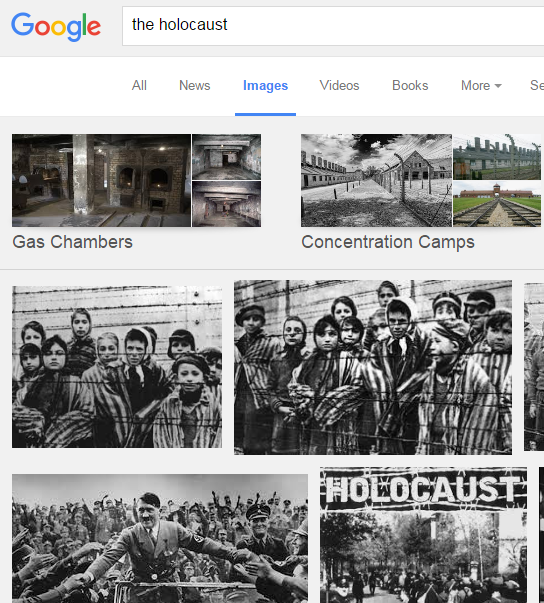
Most of you will probably use Google for your image search. Just type in your image search term. I typed in The Holocaust. 


A bunch of different images will pop up. Just click on one that you like. I clicked on the first image and a pop-up screen will show you the image more closely. 


Click on "View Image". In the address bar you will see a specific URL for the image. This is what you need for your image citation. It should end in either .jpg or .png. or .svg or some other file extension that indicates that it is an image file. 


If you're working in Microsoft Word, click on the References tab. You can select the Style of citation here (MLA, Chicago, APA, etc.). If you need to insert an in-text citation, you click on Insert Citation. If you want to start building a Bibliography, you can Insert Citation or Manage Sources.


You'll get a pop-up dialogue box like the one pictured below. I filled in the fields for the image that I picked. There are also online citation machines available as well, such as EasyBib (http://www.easybib.com/)


  1. Study your Chapter 1 and 2 Key Terms
  2. Review the case studies from the textbook in Chapters 1 and 2, specifically the Metis, the Francophones, the Hmong, and the Maori
  3. Be prepared to answer any of the "Questions for Inquiry" from Chapters 1 and 2 (they are on the following pages: p.9, p.14, p.20, p.29, p.35, p.39):
  • How does globalization affect economic aspects of people's lives?
  • How does globalization affect social aspects of people's lives?
  • How does globalization affect political aspects of people's lives?
  • What is the difference between individual and collective identity?
  • What is the relationship between identity and language?
  • How does cultural exchange shape people's identities?
4. Make sure that you can answer all of the chapter questions from the Unit 1 Worksheet


I off the lecture on the Napoleonic Age and showed you a video on Napoleon's invasion of Russia today as well. I will teach you the 19th century political spectrum on Tuesday. Don't forget that you're writing the Chapter 1-2 Test on Wednesday. Please check out the Chapter 1-2 Test Study Guide below. 

You should also have a look at this timeline of key events in Napoleon's life that I made a few years ago on Timetoast: http://www.timetoast.com/timelines/3805

You could also check out this one that I made on the key events of the French Revolution: http://www.timetoast.com/timelines/3780

For both of these timelines, click on the slider button and drag it to advance through the years. 

This test will be on Wednesday, February 21st. The test has a matching section and ashort answer section.
  • Make sure that you have read both Chapter 1-2 from your textbook Exploring Nationalism
  • Study Chapter 1-2 Key Terms from the Unit 1 Worksheet
  • Study your answers to the questions from the Unit 1 Worksheet for Chapter 1-2

Study the following PowerPoint presentations:

  • "Nation and Identity" (Chapter 1 material + supplementary material)
  • "Shaping Nationalism: The French Revolution" (Chapter 2 material + supplementary material; key terms from the French Revolution and Napoleonic Age Glossary of Key Terms)
  • "The Napoleonic Age" (Chapter 2 material + supplementary material; key terms from the French Revolution and Napoleonic Age Glossary of Key Terms)


I showed you a video from the History's Turning Points series on the Korean War. Please check your Google Drive for notes on the Korean War that I shared with you. Please print these notes out, read them, highlight them, and annotate them as well, then add them to your notebooks. I then started talking about the Truman administration. I'll be sharing the Truman administration lecture with you on Google Drive.