Showing posts with label Social 20-1 Chapter 1-2 Test Study Guide. Show all posts

Tuesday, September 17, 2019

September 17


We continued the lecture on "The Effects of World War I" today. We got through the Russian Revolution and the Russian Civil War, and we were just transitioning into the Paris Peace Conference. On Tuesday, September 24th you'll be writing a WWI Quiz. The WW I Quiz will have 15-20 multiple choice questions and a short answer question. The rough draft of your IA is due on September 30th. You have a long weekend coming up, where you should be putting the finishing touches on your rough draft.


We watched an A&E Biography on Napoleon today. I finished off the lecture on the Congress of Vienna today after the video. You have the Chapter 1-2 Test tomorrow, please see the study guide below. 


This test will be on Wednesday, September 18th. The test has a matching section and a short answer section.
  • Make sure that you have read both Chapter 1-2 from your textbook Exploring Nationalism
  • Study Chapter 1-2 Key Terms from the Unit 1 Worksheet
  • Study your answers to the questions from the Unit 1 Worksheet for Chapter 1-2
Study the following PowerPoint presentations:
  • "Nation and Identity" (Chapter 1 material + supplementary material)
  • "Shaping Nationalism: The French Revolution" (Chapter 2 material + supplementary material)
  • "The Napoleonic Age" (Chapter 2 material + supplementary material)


You wrote your Unit 1 WRA I in class today in the Blenheim Room. We'll begin Unit 2 material tomorrow. 


Monday, September 16, 2019

September 16


We started a lecture on "The Effects of World War I" today. We got through the social effects, and we were just transitioning into the political effects of the war. I also did a brief review of the political spectrum as well. Together with Ms. Phui's class, we watched a video on America's involvement in the Great War. One week from today you'll be writing a WWI Quiz. Two weeks from today you will be handing in the rough draft of your IA. You have a long weekend coming up, where you should be putting the finishing touches on your rough draft.


You wrote your Unit 1 Final Exam in class today. I will post the results in Powerschool this afternoon. Please remember that you're writing the Unit 1 WRA I (three source interpretation) tomorrow in the Blenheim Room. Please go to the Blenheim Room directly!


I lectured today on "The Napoleonic Age". We will watch an A&E Biography on Napoleon tomorrow. On Wednesday, you have the Chapter 1-2 Test, please see the study guide below.


This test will be on Wednesday, September 18th. The test has a matching section and a short answer section.
  • Make sure that you have read both Chapter 1-2 from your textbook Exploring Nationalism
  • Study Chapter 1-2 Key Terms from the Unit 1 Worksheet
  • Study your answers to the questions from the Unit 1 Worksheet for Chapter 1-2
Study the following PowerPoint presentations:
  • "Nation and Identity" (Chapter 1 material + supplementary material)
  • "Shaping Nationalism: The French Revolution" (Chapter 2 material + supplementary material)
  • "The Napoleonic Age" (Chapter 2 material + supplementary material)

Friday, September 13, 2019

September 13


You had time in the Red Lab to work on the Reflection section for your IA. Please remember that your IA rough draft (with all sections and citations complete) is due on Monday, September 30th. 


You wrote the Chapter 1-2 Test today. On Monday you have the Unit 1 Final Exam (please see the study guide below). On Tuesday, you are writing the Unit 1 WRA I (three source interpretation). Make sure that you have read Chapter 1 and 2 in the textbook and that you have worked on the Unit 1 Google Doc!!


The Unit 1 Final is a 50 question multiple choice test. It will be written on Monday, September 16th. Make sure that you study the following:
  • Chapter 1 and 2 Key Terms (please see the Chapter 1-2 Test Study Guide for a list of terms) 
  • Study the Ideology Notes (Black Gold School District PDF file, on the Social 30-1 wiki, and in your study booklets)
  • Study the 19th Century Political Spectrum
  • Study the 20th Century Political spectrum
  • Study the political-economic grid
  • Know the values and ideas associated with the various ideologies (on the 19th century and 20th century spectrums)
  • Study the principles of individualism (PRICES) and principles of collectivism (PRINCE)
  • you need to be able to apply your knowledge and understanding of these concepts/ideas
  • there are a lot of source-based questions on this exam! (there are references to Nazi Germany, the USSR)
  • know the key ideas associated with Hobbes, Locke and Rousseau (for example, view of the nature of human beings, etc.)


After the writing the World Geography Test, we finished watching the History Channel documentary on "The French Revolution" today. On Wednesday, September 18th you will be writing the Chapter 1-2 Test, please see the study guide below. 

This test will be on Wednesday, September 18th. The test has a matching section and a short answer section.
  • Make sure that you have read both Chapter 1-2 from your textbook Exploring Nationalism
  • Study Chapter 1-2 Key Terms from the Unit 1 Worksheet
  • Study your answers to the questions from the Unit 1 Worksheet for Chapter 1-2
Study the following PowerPoint presentations:
  • "Nation and Identity" (Chapter 1 material + supplementary material)
  • "Shaping Nationalism: The French Revolution" (Chapter 2 material + supplementary material)
  • "The Napoleonic Age" (Chapter 2 material + supplementary material)

Thursday, September 12, 2019

September 12


We watched the History Channel documentary on "The French Revolution" today. The Chapter 2 Key Terms and Questions are due tomorrow. You're writing a World Geography Test tomorrow as well, you can find the study guide below. On Wednesday, September 18th you will be writing the Chapter 1-2 Test, please see the study guide below. 


This test will take place on Friday, September 13th. It is simply a country identification test. You will be given a world map with certain countries identified and you need to be able to write out what country it is. Here are the countries that may appear on the test:


  • any of the EU countries (there are 28 countries in the EU, a map of the EU is in your textbook on page 265, of course, it's a bit out of date)
  • any of the NATO countries (there's some overlap here with the EU, but not all EU countries are members of NATO)
  • any of the G8 countries: Canada, France, Germany, Italy, Japan, Russia, the United States, and the United Kingdom
  • full members of MERCOSUR: Argentina, Brazil, Paraguay, Uruguay and other associate members or countries that are achieving membership in MERCOSUR, such as: Venezuela, Bolivia, Peru, Colombia, Ecuador
  • to ask you to know ALL of the countries in the African Union would be cruel, so we'll focus on countries that came up last year or will likely be in the news this year: Chad, Democratic Republic of the Congo, Egypt, Ethiopia, Kenya, Libya, Nigeria, Rwanda, Sierra Leone, Somalia, South Africa, Sudan, Zimbabwe
  • other very important countries that will be in the news this year, or that we'll be talking about, or get mentioned in your textbook: Cuba, Mexico, Jamaica, Serbia, Georgia, China, India, Myanmar, Australia, New Zealand, Indonesia, Pakistan, Afghanistan, Iran, Iraq, Israel
  • **BIG HINT: if a country is a member of a few of these international organizations then there's a STRONG possibility that they will be on the test!!**


This test will be on Wednesday, September 18th. The test has a matching section and a short answer section.
  • Make sure that you have read both Chapter 1-2 from your textbook Exploring Nationalism
  • Study Chapter 1-2 Key Terms from the Unit 1 Worksheet
  • Study your answers to the questions from the Unit 1 Worksheet for Chapter 1-2
Study the following PowerPoint presentations:
  • "Nation and Identity" (Chapter 1 material + supplementary material)
  • "Shaping Nationalism: The French Revolution" (Chapter 2 material + supplementary material)
  • "The Napoleonic Age" (Chapter 2 material + supplementary material)


We finished watching "Sicko" today. This film at its core looks at the value conflict between individualism and collectivism. I collected your Unit 1 WRA I Chart Assignment today. 

You have the Chapter 1-2 Test this Friday (please see the study guide below) and one week from today you have the Unit 1 Final Exam (please see the study guide below). Next Tuesday, you are writing the Unit 1 WRA I (three source interpretation). I will re-teach how to write WRA I in tomorrow's class. Make sure that you have read Chapter 1 and 2 in the textbook and that you have worked on the Unit 1 Google Doc!!

The Chapter 1-2 Test is on Friday, September 13th. It is a mixed format test, it will have a matching section and a short/long answer section. Here is what you should review/study for this test:
    Chapter 1 and 2 Key Terms/Concepts:

    • ideology
    • Thomas Hobbes
    • John Locke
    • Jean-Jacques Rousseau
    • representative democracy
    • individualism
    • collectivism
    • private property
    • public property
    • ideology
    • radical
    • liberal
    • moderate
    • conservative
    • reactionary
    • communism
    • socialism
    • liberalism
    • conservatism
    • fascism
    • adherence to collective norms
    • economic freedom
    • economic equality
    • rule of law
    • competition
    • individual rights and freedoms
    • cooperation
    • self-interest
    • Adam Smith
    Other Study Tips:
    • you must know the 19th century political spectrum and the 20th century political spectrum
    • know similarities and differences between communism and fascism
    • what are the differences between communism and socialism
    • be able to label political and economic spectrums and the values associated with these ideologies
    • be able to label the political-economic grid and know examples of the ideologies in the quadrants (study the Ideology Notes and the notes I gave you in class)
    • know the differences between individualism and collectivism, be able to apply your understanding of these concepts
    • know the key ideas associated with Hobbes, Locke and Rousseau (for example, view of the nature of human beings, etc.)


    The Unit 1 Final is a 50 question multiple choice test. It will be written on Monday, September 16th. Make sure that you study the following:
    • Chapter 1 and 2 Key Terms (please see the Chapter 1-2 Test Study Guide for a list of terms) 
    • Study the Ideology Notes (Black Gold School District PDF file, on the Social 30-1 wiki, and in your study booklets)
    • Study the 19th Century Political Spectrum
    • Study the 20th Century Political spectrum
    • Study the political-economic grid
    • Know the values and ideas associated with the various ideologies (on the 19th century and 20th century spectrums)
    • Study the principles of individualism (PRICES) and principles of collectivism (PRINCE)
    • you need to be able to apply your knowledge and understanding of these concepts/ideas
    • there are a lot of source-based questions on this exam! (there are references to Nazi Germany, the USSR)
    • know the key ideas associated with Hobbes, Locke and Rousseau (for example, view of the nature of human beings, etc.)


    We finished the lecture on "The Outbreak of World War I" today. This Google Slides presentation covered how the war was fought. We covered the war in the air, and at sea, and the management of the war. Remember that we'll be going to a computer lab tomorrow  to work on your IA. We'll focus in on the reflection piece. Please come to Room 111 first, and then we'll go to the computer lab together. 


    Wednesday, September 11, 2019

    September 11


    We started watching "Sicko" today, and we'll finish this off tomorrow. This film at its core looks at the value conflict between individualism and collectivism. Your Unit 1 WRA I Chart Assignment is due tomorrow. 

    You have the Chapter 1-2 Test this Friday (please see the study guide below) and one week from today you have the Unit 1 Final Exam (please see the study guide below). Next Tuesday, you are writing the Unit 1 WRA I (three source interpretation). I will re-teach how to write WRA I in tomorrow's class. Make sure that you have read Chapter 1 and 2 in the textbook and that you have worked on the Unit 1 Google Doc!!

    The Chapter 1-2 Test is on Friday, September  13th. It is a mixed format test, it will have a matching section and a short/long answer section. Here is what you should review/study for this test:
      Chapter 1 and 2 Key Terms/Concepts:

      • ideology
      • Thomas Hobbes
      • John Locke
      • Jean-Jacques Rousseau
      • representative democracy
      • individualism
      • collectivism
      • private property
      • public property
      • ideology
      • radical
      • liberal
      • moderate
      • conservative
      • reactionary
      • communism
      • socialism
      • liberalism
      • conservatism
      • fascism
      • adherence to collective norms
      • economic freedom
      • economic equality
      • rule of law
      • competition
      • individual rights and freedoms
      • cooperation
      • self-interest
      • Adam Smith
      Other Study Tips:
      • you must know the 19th century political spectrum and the 20th century political spectrum
      • know similarities and differences between communism and fascism
      • what are the differences between communism and socialism
      • be able to label political and economic spectrums and the values associated with these ideologies
      • be able to label the political-economic grid and know examples of the ideologies in the quadrants (study the Ideology Notes and the notes I gave you in class)
      • know the differences between individualism and collectivism, be able to apply your understanding of these concepts
      • know the key ideas associated with Hobbes, Locke and Rousseau (for example, view of the nature of human beings, etc.)


      The Unit 1 Final is a 50 question multiple choice test. It will be written on Monday, September 16th. Make sure that you study the following:
      • Chapter 1 and 2 Key Terms (please see the Chapter 1-2 Test Study Guide for a list of terms) 
      • Study the Ideology Notes (Black Gold School District PDF file, on the Social 30-1 wiki, and in your study booklets)
      • Study the 19th Century Political Spectrum
      • Study the 20th Century Political spectrum
      • Study the political-economic grid
      • Know the values and ideas associated with the various ideologies (on the 19th century and 20th century spectrums)
      • Study the principles of individualism (PRICES) and principles of collectivism (PRINCE)
      • you need to be able to apply your knowledge and understanding of these concepts/ideas
      • there are a lot of source-based questions on this exam! (there are references to Nazi Germany, the USSR)
      • know the key ideas associated with Hobbes, Locke and Rousseau (for example, view of the nature of human beings, etc.)


      I continued with the lecture on "The French Revolution" today. The Chapter 2 Key Terms and Questions are due tomorrow. You're writing a World Geography Test on Friday, you can find the study guide below. One week from today (Wednesday, September 18th) you will be writing the Chapter 1-2 Test, please see the study guide below. I've decided to move the due date for the Chapter 2 Key Terms and Questions from Thursday to Friday, September 13th. 


      This test will take place on Friday, September 13th. It is simply a country identification test. You will be given a world map with certain countries identified and you need to be able to write out what country it is. Here are the countries that may appear on the test:


      • any of the EU countries (there are 28 countries in the EU, a map of the EU is in your textbook on page 265, of course, it's a bit out of date)
      • any of the NATO countries (there's some overlap here with the EU, but not all EU countries are members of NATO)
      • any of the G8 countries: Canada, France, Germany, Italy, Japan, Russia, the United States, and the United Kingdom
      • full members of MERCOSUR: Argentina, Brazil, Paraguay, Uruguay and other associate members or countries that are achieving membership in MERCOSUR, such as: Venezuela, Bolivia, Peru, Colombia, Ecuador
      • to ask you to know ALL of the countries in the African Union would be cruel, so we'll focus on countries that came up last year or will likely be in the news this year: Chad, Democratic Republic of the Congo, Egypt, Ethiopia, Kenya, Libya, Nigeria, Rwanda, Sierra Leone, Somalia, South Africa, Sudan, Zimbabwe
      • other very important countries that will be in the news this year, or that we'll be talking about, or get mentioned in your textbook: Cuba, Mexico, Jamaica, Serbia, Georgia, China, India, Myanmar, Australia, New Zealand, Indonesia, Pakistan, Afghanistan, Iran, Iraq, Israel
      • **BIG HINT: if a country is a member of a few of these international organizations then there's a STRONG possibility that they will be on the test!!**


      This test will be on Wednesday, September 18th. The test has a matching section and a short answer section.
      • Make sure that you have read both Chapter 1-2 from your textbook Exploring Nationalism
      • Study Chapter 1-2 Key Terms from the Unit 1 Worksheet
      • Study your answers to the questions from the Unit 1 Worksheet for Chapter 1-2
      Study the following PowerPoint presentations:
      • "Nation and Identity" (Chapter 1 material + supplementary material)
      • "Shaping Nationalism: The French Revolution" (Chapter 2 material + supplementary material)
      • "The Napoleonic Age" (Chapter 2 material + supplementary material)


      We continued with the lecture on "The Outbreak of World War I" which covered how the war was fought. We covered the war on the Western Front, the Eastern Front, and other secondary fronts in the war. We'll talk more about the war in the air, and at sea tomorrow. Remember that this Friday we'll be going to a computer lab to work on your IA. We'll focus in on the reflection piece during Friday's class.

      Tuesday, February 19, 2019

      February 19

      I hope you all enjoyed your extra long weekend. Back at it!


      I gave you a list of key terms from the French Revolution and Napoleonic Agge Glossary (pages 65-67 in your Social 20-1 course books) that you need to know for tomorrow's Chapter 1-2 Test, so hopefully you took note of them. I went through my "Napoleonic Age" PowerPoint lecture, which is in your course books too (pages 52-64).  Tomorrow, you'll be writing your Chapter 1-2 Test, please see the study guide below. 


      This test will be on Wednesday, February 20th. The test has a matching section and a short answer section.
      • Make sure that you have read both Chapter 1-2 from your textbook Exploring Nationalism
      • Study Chapter 1-2 Key Terms from the Unit 1 Worksheet
      • Study your answers to the questions from the Unit 1 Worksheet for Chapter 1-2

      Study the following PowerPoint presentations:

      • "Nation and Identity" (Chapter 1 material + supplementary material)
      • "The French Revolution" (Chapter 2 material + supplementary material; key terms from the French Revolution and Napoleonic Age Glossary of Key Terms)
      • "The Napoleonic Age" (Chapter 2 material + supplementary material; key terms from the French Revolution and Napoleonic Age Glossary of Key Terms)


      You wrote the Unit 1 Final Exam today. I'll be posting the results of this exam this evening on PowerSchool. Some of you need to submit your Chapter 1-2 Key Terms and Questions to get homework check credit for them, otherwise I'll start changing some the blank marks to zeros in PowerSchool. I also took in your Unit 1 WRA I 3 Interpretation Chart Assignment today. I'll try to get those back to as quickly as possible. You're going to write a Unit 1 WRA I on Tuesday, February 26th, so I'd like to get the charts back to you before then.  


      Wednesday, February 13, 2019

      February 13


      I did some review of key concepts in the course so far, including: principles of individualism (PRICES-principles of liberalism), principles of collectivism (PRINCE), 19th century political spectrum, 20th century political spectrum, political-economic grid. I gave you a WRA I three source interpretation chart assignment today as well. This assignment will be due on Tuesday. I'm going to move your Unit 1 Final Exam to Tuesday, February 19th. 

      The Unit 1 Final is a 50 question multiple choice test. It will be written on Tuesday, February 19th. Make sure that you study the following:

      • Chapter 1 and 2 Key Terms (please see the Chapter 1-2 Test Study Guide for a list of terms) 
      • Study the Ideology Notes (Black Gold School District PDF file, on the Social 30-1 wiki, and in your Social 30-1 course books, pages 17-22)
      • Review Hobbes, Locke and Rousseau (view of the nature of human beings, how society should be organized, people's role in society; notes on page 3 of your study booklet)
      • Study the 19th Century Political Spectrum
      • Study the 20th Century Political spectrum
      • Study the political-economic grid
      • Know the values and ideas associated with the various ideologies (on the 19th century and 20th century spectrums)
      • Study the Individualism and Collectivism charts that is in your study booklets
      • you need to be able to apply your knowledge and understanding of these concepts/ideas
      • there are a lot of source-based questions on this exam! 


      I showed you the A & E Biography called Napoleon Bonaparte: The Glory of France. Next week I'll go over Napoleon some more. Next Wednesday, you'll be writing your Chapter 1-2 Test, please see the study guide below. 


      This test will be on Wednesday, February 20th. The test has a matching section and a short answer section.
      • Make sure that you have read both Chapter 1-2 from your textbook Exploring Nationalism
      • Study Chapter 1-2 Key Terms from the Unit 1 Worksheet
      • Study your answers to the questions from the Unit 1 Worksheet for Chapter 1-2

      Study the following PowerPoint presentations:

      • "Nation and Identity" (Chapter 1 material + supplementary material)
      • "The French Revolution" (Chapter 2 material + supplementary material; key terms from the French Revolution and Napoleonic Age Glossary of Key Terms)
      • "The Napoleonic Age" (Chapter 2 material + supplementary material; key terms from the French Revolution and Napoleonic Age Glossary of Key Terms)

      Tuesday, February 20, 2018

      February 20


      We looked at the Cuban Missile Crisis today, by watching an episode of the CNN Cold War series on Cuba (1959-1962). I've created a Google Doc for this video where you need to add your notes to. Please remember that you have a Paper 2 this Friday on the origins of the Cold War. Please check the IB 30/35 wiki (the Cold War page) for some articles/documents on origins of the Cold War historiography.

      I taught you the 19th century political spectrum today. You should have put it in your study booklets either right after the French Revolution or the Napoleonic Age PowerPoint slides.

      You also broke into groups to rank the causes of the French Revolution. I also dropped more hints about what will be on your Chapter 1-2 Test tomorrow. Please see the study guide for this test below. Your French Revolution DBA is due one week from today. 

      You should also have a look at this timeline of key events in Napoleon's life that I made a few years ago on Timetoast: http://www.timetoast.com/timelines/3805

      You could also check out this one that I made on the key events of the French Revolution: http://www.timetoast.com/timelines/3780

      For both of these timelines, click on the slider button and drag it to advance through the years. 

      This test will be on Wednesday, February 21st. The test has a matching section and ashort answer section.
      • Make sure that you have read both Chapter 1-2 from your textbook Exploring Nationalism
      • Study Chapter 1-2 Key Terms from the Unit 1 Worksheet
      • Study your answers to the questions from the Unit 1 Worksheet for Chapter 1-2

      Study the following PowerPoint presentations:

      • "Nation and Identity" (Chapter 1 material + supplementary material)
      • "Shaping Nationalism: The French Revolution" (Chapter 2 material + supplementary material; key terms from the French Revolution and Napoleonic Age Glossary of Key Terms)
      • "The Napoleonic Age" (Chapter 2 material + supplementary material; key terms from the French Revolution and Napoleonic Age Glossary of Key Terms)


      We started a film study of "Bend it Like Beckham" today, and we should be able to finish it off tomorrow. Please remember that you have your infographic assignment due tomorrow. I want you to hand in a hard copy of the assignment, along with your works cited (bibliography). Don't forget that you're writing your Chapter 1-2 Test on Thursday, please see the study guide below.

      1. Study your Chapter 1 and 2 Key Terms
      2. Review the case studies from the textbook in Chapters 1 and 2, specifically the Metis, the Francophones, the Hmong, and the Maori
      3. Be prepared to answer any of the "Questions for Inquiry" from Chapters 1 and 2 (they are on the following pages: p.9, p.14, p.20, p.29, p.35, p.39):
      • How does globalization affect economic aspects of people's lives?
      • How does globalization affect social aspects of people's lives?
      • How does globalization affect political aspects of people's lives?
      • What is the difference between individual and collective identity?
      • What is the relationship between identity and language?
      • How does cultural exchange shape people's identities?
      4. Make sure that you can answer all of the chapter questions from the Unit 1 Worksheet

      Friday, February 16, 2018

      February 16

      Sorry, it looks like I forgot to post on Wednesday. Here's what happened in class:


      For most of the class we talked about media consolidation and the big 6 media TNCs that produce 90% of the content that you consume. If you missed class today, make sure that you get the "Media Giants and Me" notes from a classmate. Please don't forget that your universalization and hybridization assignment is due on Wednesday, February 21st. Please see the notes below on how to cite the images that you use in your project. Also, don't forget that you have your Chapter 1-2 Test on Thursday, February 22nd, the study guide is posted below.


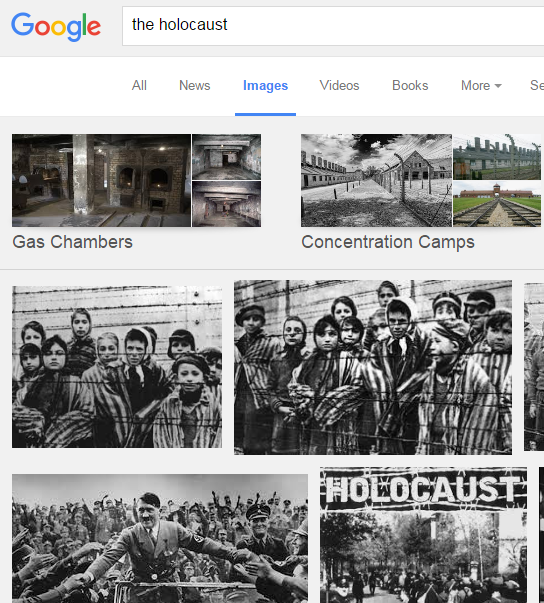
      Most of you will probably use Google for your image search. Just type in your image search term. I typed in The Holocaust. 


      A bunch of different images will pop up. Just click on one that you like. I clicked on the first image and a pop-up screen will show you the image more closely. 


      Click on "View Image". In the address bar you will see a specific URL for the image. This is what you need for your image citation. It should end in either .jpg or .png. or .svg or some other file extension that indicates that it is an image file. 


      If you're working in Microsoft Word, click on the References tab. You can select the Style of citation here (MLA, Chicago, APA, etc.). If you need to insert an in-text citation, you click on Insert Citation. If you want to start building a Bibliography, you can Insert Citation or Manage Sources.


      You'll get a pop-up dialogue box like the one pictured below. I filled in the fields for the image that I picked. There are also online citation machines available as well, such as EasyBib (http://www.easybib.com/)


      1. Study your Chapter 1 and 2 Key Terms
      2. Review the case studies from the textbook in Chapters 1 and 2, specifically the Metis, the Francophones, the Hmong, and the Maori
      3. Be prepared to answer any of the "Questions for Inquiry" from Chapters 1 and 2 (they are on the following pages: p.9, p.14, p.20, p.29, p.35, p.39):
      • How does globalization affect economic aspects of people's lives?
      • How does globalization affect social aspects of people's lives?
      • How does globalization affect political aspects of people's lives?
      • What is the difference between individual and collective identity?
      • What is the relationship between identity and language?
      • How does cultural exchange shape people's identities?
      4. Make sure that you can answer all of the chapter questions from the Unit 1 Worksheet


      I off the lecture on the Napoleonic Age and showed you a video on Napoleon's invasion of Russia today as well. I will teach you the 19th century political spectrum on Tuesday. Don't forget that you're writing the Chapter 1-2 Test on Wednesday. Please check out the Chapter 1-2 Test Study Guide below. 

      You should also have a look at this timeline of key events in Napoleon's life that I made a few years ago on Timetoast: http://www.timetoast.com/timelines/3805

      You could also check out this one that I made on the key events of the French Revolution: http://www.timetoast.com/timelines/3780

      For both of these timelines, click on the slider button and drag it to advance through the years. 

      This test will be on Wednesday, February 21st. The test has a matching section and ashort answer section.
      • Make sure that you have read both Chapter 1-2 from your textbook Exploring Nationalism
      • Study Chapter 1-2 Key Terms from the Unit 1 Worksheet
      • Study your answers to the questions from the Unit 1 Worksheet for Chapter 1-2

      Study the following PowerPoint presentations:

      • "Nation and Identity" (Chapter 1 material + supplementary material)
      • "Shaping Nationalism: The French Revolution" (Chapter 2 material + supplementary material; key terms from the French Revolution and Napoleonic Age Glossary of Key Terms)
      • "The Napoleonic Age" (Chapter 2 material + supplementary material; key terms from the French Revolution and Napoleonic Age Glossary of Key Terms)


      I showed you a video from the History's Turning Points series on the Korean War. Please check your Google Drive for notes on the Korean War that I shared with you. Please print these notes out, read them, highlight them, and annotate them as well, then add them to your notebooks. I then started talking about the Truman administration. I'll be sharing the Truman administration lecture with you on Google Drive.