Showing posts with label Napoleonic Age. Show all posts

Monday, October 15, 2018

October 15


We finished off the History Channel video on "The French Revolution" today. We'll move on to talking about Napoleon Bonaparte in tomorrow's class. I will be giving a document based analysis (DBA) assignment on the French Revolution tomorrow.

Here's your ear worm for the day:


I did a homework check on your Chapter 6 Key Terms and Questions today at the beginning of class, so make sure that when you're writing the test tomorrow that you hand them. I started a lecture on "The Evolution of Modern Liberalism" today, but didn't finish it. I'll finish it off on Wednesday. Please remember that you have the Ideological Reaction to Industrialization Test tomorrow, you can find the study guide below.


This test is multiple choice format. This test is on Tuesday, October 16th. 

1. Please review material from these PowerPoint presentations: 
  • "The Development of Classical Liberalism"
  • "Responding to Classical Liberalism"

2. Be familiar with key concepts introduced in Chapters 3 and 4.
3. The Industrial Revolution:
  • understand fundamental economic, social and political changes that were caused by the Industrial Revolution
  • understand the connection between the Agricultural Revolution and the Enclosure Acts and the Industrial Revolution
  • understand the differences, advantages and disadvantages of the cottage system and the factory system
4. Key beliefs of the various ideologies (review the spectrums briefly); also review this material from the "Responding to Classical Liberalism" PowerPoint presentation:
  • Adam Smith
  • laissez faire economics/capitalism (key ideas)
  • John Stuart Mill
  • Karl Marx (key ideas and beliefs associated with Marx, Das Kapital, The Communist Manifesto, withering away of the state, dictatorship of the proletariat, view of history, etc. ) and Friedrich Engels 
  • Edmund Burke and classical conservatism
5. Some questions may require you to make connections between this year's material and what you learned in 10-1 and 20-1 as well 


You finished off the Unit 1 WRA II Essay today in class. I will hopefully have them marked in two weeks time. Your Chapter 6 Key Terms and Questions are due tomorrow. We're going to start Unit 2 material tomorrow.

Friday, February 16, 2018

February 16

Sorry, it looks like I forgot to post on Wednesday. Here's what happened in class:


For most of the class we talked about media consolidation and the big 6 media TNCs that produce 90% of the content that you consume. If you missed class today, make sure that you get the "Media Giants and Me" notes from a classmate. Please don't forget that your universalization and hybridization assignment is due on Wednesday, February 21st. Please see the notes below on how to cite the images that you use in your project. Also, don't forget that you have your Chapter 1-2 Test on Thursday, February 22nd, the study guide is posted below.


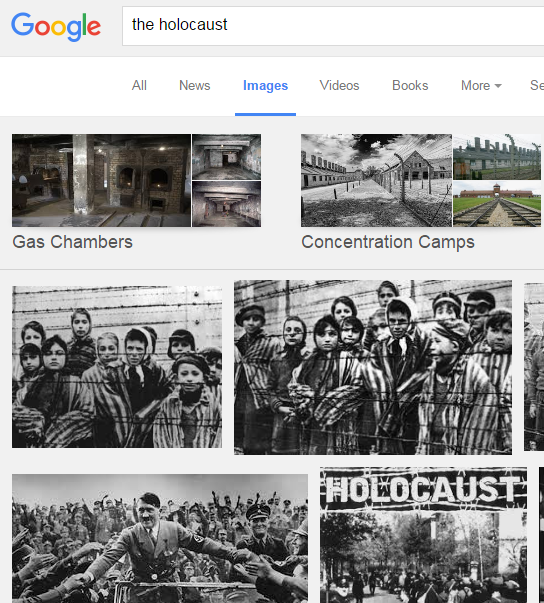
Most of you will probably use Google for your image search. Just type in your image search term. I typed in The Holocaust. 


A bunch of different images will pop up. Just click on one that you like. I clicked on the first image and a pop-up screen will show you the image more closely. 


Click on "View Image". In the address bar you will see a specific URL for the image. This is what you need for your image citation. It should end in either .jpg or .png. or .svg or some other file extension that indicates that it is an image file. 


If you're working in Microsoft Word, click on the References tab. You can select the Style of citation here (MLA, Chicago, APA, etc.). If you need to insert an in-text citation, you click on Insert Citation. If you want to start building a Bibliography, you can Insert Citation or Manage Sources.


You'll get a pop-up dialogue box like the one pictured below. I filled in the fields for the image that I picked. There are also online citation machines available as well, such as EasyBib (http://www.easybib.com/)


  1. Study your Chapter 1 and 2 Key Terms
  2. Review the case studies from the textbook in Chapters 1 and 2, specifically the Metis, the Francophones, the Hmong, and the Maori
  3. Be prepared to answer any of the "Questions for Inquiry" from Chapters 1 and 2 (they are on the following pages: p.9, p.14, p.20, p.29, p.35, p.39):
  • How does globalization affect economic aspects of people's lives?
  • How does globalization affect social aspects of people's lives?
  • How does globalization affect political aspects of people's lives?
  • What is the difference between individual and collective identity?
  • What is the relationship between identity and language?
  • How does cultural exchange shape people's identities?
4. Make sure that you can answer all of the chapter questions from the Unit 1 Worksheet


I off the lecture on the Napoleonic Age and showed you a video on Napoleon's invasion of Russia today as well. I will teach you the 19th century political spectrum on Tuesday. Don't forget that you're writing the Chapter 1-2 Test on Wednesday. Please check out the Chapter 1-2 Test Study Guide below. 

You should also have a look at this timeline of key events in Napoleon's life that I made a few years ago on Timetoast: http://www.timetoast.com/timelines/3805

You could also check out this one that I made on the key events of the French Revolution: http://www.timetoast.com/timelines/3780

For both of these timelines, click on the slider button and drag it to advance through the years. 

This test will be on Wednesday, February 21st. The test has a matching section and ashort answer section.
  • Make sure that you have read both Chapter 1-2 from your textbook Exploring Nationalism
  • Study Chapter 1-2 Key Terms from the Unit 1 Worksheet
  • Study your answers to the questions from the Unit 1 Worksheet for Chapter 1-2

Study the following PowerPoint presentations:

  • "Nation and Identity" (Chapter 1 material + supplementary material)
  • "Shaping Nationalism: The French Revolution" (Chapter 2 material + supplementary material; key terms from the French Revolution and Napoleonic Age Glossary of Key Terms)
  • "The Napoleonic Age" (Chapter 2 material + supplementary material; key terms from the French Revolution and Napoleonic Age Glossary of Key Terms)


I showed you a video from the History's Turning Points series on the Korean War. Please check your Google Drive for notes on the Korean War that I shared with you. Please print these notes out, read them, highlight them, and annotate them as well, then add them to your notebooks. I then started talking about the Truman administration. I'll be sharing the Truman administration lecture with you on Google Drive.

Tuesday, November 01, 2016

November 1

Better late than never...


You wrote your Chapter 5-6 Test yesterday (I'm in the process of marking it, it will take me a while to get both classes marked), and today we watched "Blitzkrieg to the Bomb". Tomorrow, you'll be watching an excerpt from "Saving Private Ryan" since we're looking at the D-Day landing on the beaches of Normandy.


You had time to work on your IA today, hopefully you took advantage of it. We're booked into the Blenheim again tomorrow, but please come to my classroom and then we'll go down to the lab together. Please remember that you have your French Revolution and Napoleonic Age Test on Thursday. We're doing the current events quiz on Friday along with the four options debate on Saint Domingue (Haiti).


  • know the causes of the French Revolution (short term, long term, economic, political, social, intellectual)
  • know the structure of French society during the Old Regime
  • know Napoleon's domestic policy
  • know Napoleon's foreign policy (Continental System in particular)
  • know key battles in the Napoleonic Wars (results of the Battle of Trafalgar, Russian campaign, the Battle of Leipzig, and the Battle of Waterloo)
  • know chronology of key events in the French Revolution
  • know the chronology of key events in the Napoleonic Age
  • know the key players at the Congress of Vienna (country and representatives)
  • what were the major decisions of the Congress? what were the guiding principles at the Congress of Vienna
  • know the 19th century political spectrum (please see the graphic below; values and characteristics of the various positions on the spectrum; what groups are represented on the various positions on the spectrum?; what phases/accomplishments of the French Revolution are represented on the spectrum?)

Tuesday, October 25, 2016

October 25


I finished a lecture today on "Ultrantionalism in Germany, Italy and Japan". I gave you some time to read about Japanese expansionism and reasons why the Japanese attacked Pearl Harbor. you have homework due on Thursday, October 27th, you must answer the questions for analysis with the Way of Subjects reading in your Social 20-1 workbooks. On Monday, October 31st you'll be writing your Chapter 5-6 Test, please see the study guide below. 


1. Study the following key concepts/key people/key events:
  • Archduke Franz Ferdinand
  • Triple Alliance
  • Triple Entente
  • the Black Hand
  • Gavrillo Princip
  • Tsar Nicholas II
  • Kaiser Wilhelm II
  • Battle of Tannenberg
  • the Schlieffen Plan
  • Plan 17
  • General von Moltke
  • Battle of the Marne
  • Alsace and Lorraine
  • total war
  • Battle of Verdun
  • Battle of the Somme
  • the Brusilov Offensive
  • sinking of the Lusitania
  • the Zimmermann Telegram
  • Treaty of Brest-Litovsk
  • General Ludendorff
  • Friedrich Ebert
  • Paris Peace Conference
  • David Lloyd George
  • Woodrow Wilson
  • Fourteen Points
  • Georges Clemenceau
  • Vittorio Orlando
  • League of Nations
  • plebiscites
  • reparations
  • collective security
  • war debts
  • Treaty of Versailles
  • "war guilt clause"
  • "Manchurian Incident"
  • Greater East Asian Co-Prosperity Sphere
  • expansionism
  • Hirohito
  • Hideki Tojo
  • Benito Mussolini
  • Adolf Hitler
  • Kristallnacht
  • the Nuremberg Laws
  • any of the key concepts or key events in the Interwar Years booklet is also testable material

2. Look at what I have emphasized in class (causes of WWI, nature of WWI, armistice, Paris Peace Conference, Treaty of Versailles, the Interwar Years, rise of ultranationalism in Germany, Italy and Japan): this will be the emphasis of the test, there are several topics in your textbook Chapters 5-6 that WILL NOT be on this test, especially if it is event that occurs AFTER the events listed above (so things like Canada's role in Afghanistan, and Arctic sovereignty won't be on the test) 

3. Focus your review on the following big concepts:
  • MAIN Causes of World War I
  • the nature of World War I (trench warfare, stalemate, total war)
  • the Paris Peace Conference (national interests in negotiating the treaties)
  • Woodrow Wilson's Fourteen Points (links on the blog, under Social 20-1 Links, CHECK IT OUT!!)
  • the Treaty of Versailles (terms of the Treaty of Versailles: GARGLe)
  • Hitler's violation of the Treaty of Versailles (chronology; order of events that violated the terms of the Treaty of Versailles)
  • the Interwar Years (key events, study your Interwar Years notes in your Social 20-1 study booklet)
  • the League of Nations (FAILURe of the League of Nations)
  • ultranationalism in Germany, Japan and Italy (common characteristics?)
  • failure of collective security (League of Nations) in Manchuria, Abyssinia, and the Spanish Civil War
  • appeasement of Adolf Hitler (Munich Conference, Neville Chamberlain, a foreign policy response to ultranationalism)


You wrote your Current Events Quiz #4 in class today. I started a lecture on the Napoleonic Age in class today. I stopped when I got to the Congress of Vienna. I'll show you an A & E Biography on Napoleon Bonaparte in class tomorrow. Please remember that your French Revolution DBA is due tomorrow. One piece of advice I'd like to offer for the section on the Declaration of the Rights of Man is the following: although this section is out of 16 marks and there are 8 Enlightenment ideas you shouldn't limit yourself to just two ideas/clauses per section. You can use clauses/articles more than once. Some Enlightenment ideas have 3-5 examples in the Declaration of the Rights of Man, include all article that are applicable. You MUST include the article number, and a short quote from that article, that's it. 

Tuesday, October 28, 2014

October 28


You wrote your Chapter 5 Test today, so you'll get the results back tomorrow. Please remember that your Chapter 7 Key Terms and Questions are due on Thursday, November 6th. It's a lot of work, so start getting some of that work done tonight!


We finished looking at Napoleon Bonaparte today, by watching the A & E Biography "Napoleon Bonaparte: The Glory of France". I also showed you a video from the Turning Points of History series on Napoleon's invasion of Russia. Tomorrow you'll be writing a WRA I three source analysis assignment. Your Unit 5 Test is on Monday, November 3rd, please see the study guide below.


2. Other study tips:
  • know the causes of the French Revolution (short term, long term, economic, political, social, intellectual)
  • know the structure of French society during the Old Regime
  • know Napoleon's domestic policy
  • know Napoleon's foreign policy (Continental System in particular)
  • know key battles in the Napoleonic Wars (results of the Battle of Trafalgar, Russian campaign, the Battle of Leipzig, and the Battle of Waterloo)
  • know chronology of key events in the French Revolution
  • know the chronology of key events in the Napoleonic Age
  • know the key players at the Congress of Vienna (country and representatives)
  • what were the major decisions of the Congress? what were the guiding principles at the Congress of Vienna
  • know the 19th century political spectrum (please see the graphic below; values and characteristics of the various positions on the spectrum; what groups are represented on the various positions on the spectrum?; what phases/accomplishments of the French Revolution are represented on the spectrum?)
3. Study the 19th century political spectrum (click on the graphic to enlarge it)


Monday, October 27, 2014

October 27


You wrote your Unit 2 WRA I three source analysis assignment today in the Blenheim Room. If you missed today's class, you MUST make this writing assignment up on another day. Please remember that you have your Chapter 5 Test tomorrow. Your Chapter 7 Key Terms and Questions are due on Thursday, November 6th. Make sure that you read Chapter 7! It will probably take us almost two weeks to get through this chapter alone, since it covers the Cold War.

The Chapter 5 Test will be on Tuesday, October 28th. It is a 70 multiple choice question test. Please review the following:

  • "20th Century Rejections of Liberalism" (ppt)
  • Marx notes (see 30-1 booklet)
  • Lenin notes (see 30-1 booklet)
  • Stalin notes (see 30-1 booklet)
  • Soviet Economy notes
  • Soviet Economic System notes
  • Changes to Soviet Society After Stalin notes
  • Gorbachev to Collapse notes
  • Economic Planning in the USSR booklet
  • Characteristics of Democracy
  • Characteristics of Dictatorship
  • Democratic Systems notes
  • Non-Democratic Systems notes
  • Types of Dictatorships notes (includes Techniques of Dictatorships as well)
  • A Comparison of Communism and Fascism notes
  • Totalitarianism notes
  • Fascism/Nazism booklet (has techniques of dictatorship in Nazi Germany and USSR)
  • do a brief review of the political and economic spectrums

The following key concepts/key events/key people are mentioned in this test, if you (re-)familiarize yourself with them it will help you out immensely!

  • centrally planned economies
  • initiative
  • FDR and the New Deal
  • Reaganomics
  • consumer sovereignty
  • invisible hand
  • Keynesian economics
  • laissez faire economics
  • War Communism
  • Five Year Plans
  • mixed economies
  • indicative planning
  • proportional representation
  • democracy
  • dictatorship
  • political spectrum (characteristics associated with the various ideologies)
  • status quo
  • egalitarianism
  • conservative
  • reactionary
  • liberal
  • radical
  • SA
  • Hitler
  • Bolshevik
  • fascism
  • communism
  • indoctrination
  • controlled participation
  • terror and force
  • direction of popular discontent
  • democratic socialists
  • supply-side economics
  • authoritarian
  • tyrant
  • totalitarian
  • totalitarianism
  • ultranationalism
  • nationalization
  • privatization
  • propaganda
  • progressive taxation
  • Marx
  • Lenin
  • utopian socialism
  • Gorbachev
  • martial law
  • Reichstag (Reichstag Fire, Reichstag election results)
  • referendum
  • collectivization
  • modernization
  • classical liberal
  • laissez faire free market economy
  • mixed economy
  • planned economy
  • (review your economic political quadrant model)
  • Das Kapital
  • Mein Kampf
  • The Wealth of Nations


I finished off the PowerPoint presentation on the Napoleonic Age today. This presentation has already been posted on the wiki. I also tried to re-teach how to write a WRA I three source analysis assignment. You will be writing a WRA I on Wednesday. Your French Revolution DBA was due today, if it wasn't handed in on time, you will lose 10% per day that it is late. We'll finish up talking about Napoleon Bonaparte tomorrow. Please remember that you have your Unit 5 Test next week, please see the study guide below.


This test will have a mixed format: it will have a matching section, short answer section and a multiple choice section. This test will be written on Monday, November 3rd. Please use the following study guide tips.

2. Other study tips:
  • know the causes of the French Revolution (short term, long term, economic, political, social, intellectual)
  • know the structure of French society during the Old Regime
  • know Napoleon's domestic policy
  • know Napoleon's foreign policy (Continental System in particular)
  • know key battles in the Napoleonic Wars (results of the Battle of Trafalgar, Russian campaign, the Battle of Leipzig, and the Battle of Waterloo)
  • know chronology of key events in the French Revolution
  • know the chronology of key events in the Napoleonic Age
  • know the key players at the Congress of Vienna (country and representatives)
  • what were the major decisions of the Congress? what were the guiding principles at the Congress of Vienna
  • know the 19th century political spectrum (please see the graphic below; values and characteristics of the various positions on the spectrum; what groups are represented on the various positions on the spectrum?; what phases/accomplishments of the French Revolution are represented on the spectrum?)
3. Study the 19th century political spectrum (click on the graphic to enlarge it)


Thursday, April 17, 2014

April 17


You wrote your Unit 5 Test on the French Revolution and Napoleonic Age today, it took the entire period. Your Facebook assignment for your assigned Latin American revolutionary leader is due on Thursday, April 24th.


Most of today's class was spent preparing for next Wednesday's debate on the following topic: "Be it resolved that the 21st century will belong to China". You were split into the affirmative (PROP) and negative (OPP) sides in this debate. You had some time organize your thoughts and ideas, and take in some of the topics that I suggested you examine. I'll include some links to topics raised in class today in this post. To get a closer look at any of the infographics below, right click on the image and open in a new window.

Useful links to prepare for the debate:


Please remember that you have your Unit 2 Final Exam on Tuesday, April 22nd, please see the study guide here (scroll down to find it).


You wrote your Paper 3 on the U.S. Civil Rights Movement today in class. Please remember that you have Nixon assignment due on Tuesday, April 22nd.

Tuesday, April 08, 2014

April 8


You watched the A & E Biography of Malcolm X today. After the video you should have split into your seven task groups. Each task group must put together a detailed essay outline for their signed Paper 3 essay question and post their work on the IB 30/35 wiki under Collaborative Notes. Your group's page must be edited by Thursday. Please don't forget to include historiography. Please remember that you have your U.S. Civil Rights Movement Test on Thursday, please see the study guide here.

You watched the A & E Biography of Napoleon Bonaparte today. While you watched this video you could have been filling in any missing gaps in the Napoleon Bonaparte timeline that I gave you yesterday. You should have also finished off the "The Napoleonic Age" PowerPoint presentation that I started yesterday.

You should have handed in your Chapter 9 Key Terms and Questions today. You should have watched Part 1 of "Where the Spirit Lives" today. You'll finish off this film tomorrow, and you will write a quiz on it as well.

Wednesday, September 18, 2013

September 18

We watched a video from the History's Turning Points series on Napoleon's invasion of Russia. I then assigned the French Revolution DBA Assignment for next Thursday (September 26th) and gave you some additional instructions on how to complete this assignment. The assignment is in your Social 20-1 blue study booklets, and there's an electronic copy on the Social 20-1 wiki under Unit 1 Assignments. You are writing your Chapter 1-2 Test tomorrow, we went over the study guide in class today. Make sure that you prepare for this test! I think what I gave you in class might be better than what's published on the blog.
You wrote your Unit 1 Final Exam today. You'll get the results of this test back tomorrow. Your Chapter 3 Key Terms are due tomorrow.
Most of today's class was spent in the library doing research for the TOK Civil War Presentations. These presentations will happen on Tuesday and Wednesday, the 24th and 25th respectively, in class.

Monday, September 16, 2013

September 16

We finished off the US History series video on the "Causes of the Civil War". I then delivered a PowerPoint presentation on "The Causes of the Civil War". This presentation is already on IB 30 wiki in the United States Civil War section. You have a Civil War mapping assignment due on Thursday. Both the maps and the instructions are on the IB 30 wiki. We'll be splitting you into TOK Civil War presentation groups in class tomorrow.
We watched a video today from the A & E Biography series on Napoleon Bonaparte. While you watched this video you should have taken notes on the timeline sheet that I gave you. I went over the 19th century political spectrum (thanks for the reminder!) completely. I started a PowerPoint lecture on the Napoleonic Age. You can check out timeline of the key events of the French Revolution here and a timeline of the Napoleonic Age here. These timelines are hosted at TimeToast, and you can view them in timeline form (as they appear below) and in chart format on their website. Your Chapter 1-2 Test is on Thursday, you can find the study guide here (scroll down to find it).

Key Events of the French Revolution


The Napoleonic Age


We finished watching "Sicko" today. We also started Unit 2 material today, by delving into "The Development of Classical Liberalism". This PowerPoint presentation is up on the Social 30-1 wiki under Unit 2 Presentations. While I was going through this lecture you should have taken notes on it. Please remember that you have your Unit 1 WRA II Essay tomorrow, please go directly to Room 104. Your Unit 1 Final Exam is on Wednesday, September 18th, you can find the study for this exam here (scroll down to find it).

Thursday, October 25, 2012

October 25

We started today's class with a current events quiz, which we marked in class. I then finished off "The Napoleonic Age" PowerPoint presentation today as well, which dealt with the Congress of Vienna. This PowerPoint is already on the IB 20 wiki under Unit 5 material. Please remember that you have your Unit 5 Test on Wednesday, October 31st, please see the study guide here (scroll down to find it).
We finished watching "Where the Spirit Lives" today, and then you wrote a quiz on the film. I also gave you a reading on the residential school apology. Please make sure you read those articles! Your Unit 2 WRA I is on Monday, and your Imperialism Research Project is due on October 29th as well. You have your Unit 2 Final Exam on Tuesday, October 30th, please see the study guide here (scroll down to find it).
You wrote your Emergence of the Americas (1900-1914) Quiz at the start of the period. After the quiz, we started doing presentations on the various battles that Canadian and American troops were involved in. We'll finish those presentations off on Monday.

  • IA rough drafts are due on October 30th.
  • Extended Essay outlines are due on November 5th.
  • The rough draft of the EE is due on December 10th.

Wednesday, October 24, 2012

October 24

We started looking at the residential school system today. We started a film study on "Where the Spirit Lives" today. We will finish this film tomorrow, and then you'll write a quiz on it. Don't forget about your Unit 2 WRA I on Monday. Your Imperialism Research Project is due on Monday as well. Your Unit 2 Final Exam is on Tuesday, October 30th, please see the study guide here (scroll down to find it).

We continued our examination of Napoleon today. I delivered a PowerPoint lecture on "The Napoleonic Age" today. This PowerPoint presentation is already on the wiki under Unit 5: The French Revolution and the Napoleonic Age. I also showed you a video from the History's Turning Point series on Napoleon's Invasion of Russia. We'll talk about the Congress of Vienna tomorrow. You have a test on Wednesday next week on Unit 5 material.


(If you don't know some of these terms, I have posted a glossary of key terms for the French Revolution and Napoleonic Age on the IB 20 wiki, under Unit 5)

2. Other study tips:

  • know the causes of the French Revolution (short term, long term, economic, political, social, intellectual)
  • know the structure of French society during the Old Regime
  • know Napoleon's domestic policy
  • know Napoleon's foreign policy (Continental System in particular)
  • know key battles in the Napoleonic Wars (results of the Battle of Trafalgar, Russian campaign, the Battle of Leipzig, and the Battle of Waterloo)
  • know chronology of key events in the French Revolution
  • know the chronology of key events in the Napoleonic Age
  • know the key players at the Congress of Vienna (country and representatives)
  • what were the major decisions of the Congress? what were the guiding principles at the Congress of Vienna
  • know the 19th century political spectrum (please see the graphic below; values and characteristics of the various positions on the spectrum; what groups are represented on the various positions on the spectrum?; what phases/accomplishments of the French Revolution are represented on the spectrum?)
3. Study the 19th century political spectrum (click on the graphic to enlarge it). KNOW it EXTREMELY well. Knowing the 19th century political spectrum now will help you later on this semester when we get to our units on Democracy and Dictatorship, and it will help to know it for the Social 30-1 Diploma Exam.


I talked about American involvement in the First World War for the entire period. The PowerPoint presentation that I lectured from is on the wiki already under the Emergence of the Americas in Global Affairs section of the IB 30 wiki. Tomorrow you will be writing a quiz on the Emergence of the Americas (1900-1914). This quiz has key terms from the PowerPoints in this unit and a map quiz of the Americas.

Tuesday, October 23, 2012

October 23

I went through a quick set of notes that is already up on the wiki called "If WWI Were a Barfight". Your Emergence of the Americas (1900-1914) Quiz has been moved to Thursday. I assigned groups for quick presentations on American and Canadian involvement in the First World War. In small groups you'll have to do 5 minute presentations on one of the following battles:
  • Cantigny
  • Chateau-Thierry
  • Belleau Wood
  • Second Battle of the Marne
  • St. Miniel
  • Meuse-Argonne
  • Second Battle of Ypres
  • St. Eloi
  • Battle of the Somme
  • Courcelette
  • Vimy Ridge
  • Hill 70
  • Passchendaele
  • The 100 Days
These presentations will happen in class on Thursday. The audience members will have to make retrieval charts of the information that you share in your presentation. Make sure that you cover the date when the battle happened, who the participants were (commanders), description of the battle, and the significance of the battle.
We covered a lot of ground today. I introduced the 19th century political spectrum to you. As you can see the origins of our reference to "left wing" and "right wing" stems from terminology used during the French Revolution and afterwards. We'll talk more about the Congress of Vienna in the days to come, so you'll understand the reactionary point of view a bit better then. You watched an A & E Biography on Napoleon today called "Napoleon Bonaparte: The Glory of France". As you watched this video, you were supposed to take notes. I'll be talking more about the Napoleonic Age tomorrow in class. Hopefully we'll reach the Congress of Vienna too.
You wrote your Chapter 7 Test today, which took the entire period. We'll begin looking at the residential school system tomorrow, so it's probably a good idea to read Chapter 9 before tomorrow's class. Your Chapter 9 Key Terms and Questions are due on Thursday. Your Imperialism Research Project is due on Monday, October 29th and you'll also be doing a Unit 2 WRA I on the 29th as well. Your Unit 2 Final Exam is on October 30th, please see the study guide below.

This final exam is entirely multiple choice format. There are 57 multiple choice questions. This Unit 2 Final Exam will be on Tuesday, October 30th. Please make sure that you study your key terms from Unit 2 (Chapters 6-9), as well as the three PowerPoint presentations from this unit:
  • "Historical Globalization and Imperialism"
  • "Legacies of Historical Globalization"
  • "Legacies of Historical Globalization in Canada"
Key Concepts from Unit 2:
  • world views
  • historical globalization
  • cultural contact
  • depopulation
  • the Silk Road
  • international trade
  • mercantilism
  • capitalism
  • free market
  • entrepreneurs
  • Adam Smith
  • exploitation
  • communism
  • industrialization
  • Industrial Revolution
  • cottage industries
  • imperialism
  • "new" imperialism
  • "old" imperialism
  • colony
  • protectorate
  • sphere of influence
  • paternalistic
  • Confederation
  • residential schools
  • the Oka crisis
  • First Nations Policing Policy
  • legacy
  • ethnocentrism
  • Eurocentrism
  • Scramble for Africa
  • Leopold II
  • migration
  • displacement
  • British East India Company
  • Queen Elizabeth I
  • the Raj
  • Mohandas Gandhi
  • swadeshi
  • deindustrialization
  • colonization
  • the Hundred Associates
  • Hudson’s Bay Company
  • Rupert’s Land
  • North West Company
  • Seven Years’ War
  • Proclamation of 1763
  • Quebec Act of 1774
  • the Numbered Treaties
  • the Indian Act
  • Status Indian
  • Non-Status Indian
  • multiculturalism
  • specific claims
  • comprehensive claims

Tuesday, April 03, 2012

April 3

We finished watching the CNN Cold War series today by watching the final chapter in the series called "Conclusions (1989-1991)". This chapter focused on the break-up of Eastern bloc countries such as Czechoslovakia and Romania as well as the break-up of the Soviet Union. As I said in class, some of Gorbachev's domestic policy reforms coupled with his foreign policy decisions contributed to the end of the Cold War. Please remember that you have your Cold War Exam on Thursday, please see the study guide here.
We finished watching the History Channel documentary "The French Revolution" today. We then moved directly into a PowerPoint presentation on the Napoleonic Age, which we will finish tomorrow.