Thursday, February 09, 2017

February 9


I did a homework check on your Chapter 1 Key Terms and Questions today at the beginning of class. Most of today's class was spent getting ready for the Illustrated Concept Map Assignment (which is due on Wednesday, February 22nd). You some time to brainstorm, look at exemplars, and plan out your concept web. Please see below how to properly cite images for this project. 

Your Chapter 2 Key Terms and Questions are due on Monday, February 13th. You also have to complete your global connections map by tomorrow (Friday, February 10th). The instructions for completing this mapping assignment are below.


This test will take place on Monday, February 13th. It is simply a country and capital cities identification test. You will be given a world map with certain countries, capital cities, and places identified and you need to be able to write out what country it is. Here are the countries that may appear on the test:
  • any of the EU countries (there are 28 countries in the EU)
  • any of the NATO countries (there's some overlap here with the EU, but not all EU countries are members of NATO)
  • any of the G7 countries: Canada, France, Germany, Italy, Japan, the United States, and the United Kingdom
  • full members of MERCOSUR: Argentina, Brazil, Paraguay, Uruguay and other associate members or countries that are achieving membership in MERCOSUR, such as: Venezuela, Bolivia, Peru, Colombia, Ecuador
  • to ask you to know ALL of the countries in the African Union would be cruel, so we'll focus on countries that came up last year or will likely be in the news this year: Democratic Republic of the Congo, Egypt, Nigeria, South Africa, Sudan
  • other very important countries that will be in the news this year, or that we'll be talking about, or get mentioned in your textbook: Cuba, Mexico, China, India, Myanmar (Burma), Australia, New Zealand, Indonesia, Pakistan, Philippines, Afghanistan, Iran, Iraq, Israel
  • **BIG HINT: if a country is a member of a few of these international organizations then there's a STRONG possibility that they will be on the test!!**
Please use the following links for studying for this test:


Here are the instructions for the map (which is due on Friday, February 10th):
  • your map must have a title ("Global Connections Map")
  • you do not need compass directions on your map
  • you do not need a border for your map
  • you must have a simple key on the front of the map and a detailed key on the back on the map
  • your simple key will consist of the following: 5-6 colored boxes (depending on how many categories you had for your 25 item chart) which will be labeled- food, clothing, electronics, entertainment, household goods, miscellaneous AND you must also draw a colored dot and label it "people" (for the information from the Global Bingo game that we played)
  • you will only color countries and label ones that you have a connection to through the 25 item chart (for example, you own a sombrero that is from Mexico, you would color Mexico and label it "Mexico")
  • there will only be 5-6 colors on the map, you don't need to have 25 different colors for each of your 25 items
  • you also have to label the 16 people that you talked to during our Global Bingo game, they will be represented by colored circles (pick a common color for all people) and numbers (1-16, if you didn't talk to 16 people, you label as many as you talked to)--you do not color the countries that are represented on your Global Bingo card, you simply draw a circle on the country, color it, put a number beside it, and label the country (for example, if the only connection you have to Australia is that one of your classmates went on a vacation there, you draw the circle, write the number beside the circle, and label the country "Australia"-- you don't color the country)
  • on the detailed key on the back of your map, you will be recreating your 25 item chart (make sure that you have the categories clearly colored and matching the simple key on the front of the map) and the information from the Global Bingo card (clearly identify people by number) Your Global Connections Map is due on Friday, February 10th.


This should help Social 10-1 students who are working on their Illustrated Concept Map Assignments. Of course, if you use Chicago or MLA, the citations may look slightly different. 


Most of you will probably use Google for your image search. Just type in your image search term. I typed in The Holocaust. 
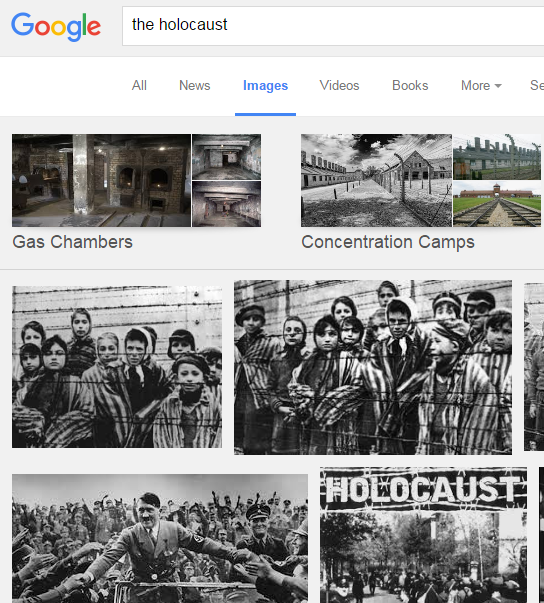


A bunch of different images will pop up. Just click on one that you like. I clicked on the first image and a pop-up screen will show you the image more closely. 


Click on "View Image". In the address bar you will see a specific URL for the image. This is what you need for your image citation. It should end in either .jpg or .png. or .svg or some other file extension that indicates that it is an image file. 


If you're working in Microsoft Word, click on the References tab. You can select the Style of citation here (MLA, Chicago, APA, etc.). If you need to insert an in-tezt citation, you click on Insert Citation. If you want to start building a Bibliography, you can Insert Citation or Manage Sources.


You'll get a pop-up dialogue box like the one pictured below. I filled in the fields for the image that I picked. There are also online citation machines available as well, such as EasyBib (http://www.easybib.com/)


You got the results of your Enlightenment Thinkers Quiz today. I continued a lecture today on the French Revolution. You have a World Geography Test on Monday, February 13th. You can find the study guide for this test below.

Key dates for Social 20-1 students:

  • Chapter 2 Key Terms and Questions are due on February 13th
  • World Geography Test is on Monday, February 13th (please see study guide below)

This test will take place on Monday, February 13th. It is simply a country identification test. You will be given a world map with certain countries identified and you need to be able to write out what country it is. Here are the countries that may appear on the test:
  • any of the EU countries (there are 28 countries in the EU, a map of the EU is in your textbook on page 265, but it's out of date, it says that there's 27 countries in the EU. I'm not even talking about Brexit here...)
  • any of the NATO countries (there's some overlap here with the EU, but not all EU countries are members of NATO)
  • any of the G8 (G7) countries: Canada, France, Germany, Italy, Japan, Russia, the United States, and the United Kingdom
  • full members of MERCOSUR: Argentina, Brazil, Paraguay, Uruguay and other associate members or countries that are achieving membership in MERCOSUR, such as: Venezuela, Bolivia, Peru, Colombia, Ecuador
  • to ask you to know ALL of the countries in the African Union would be cruel, so we'll focus on countries that came up last year or will likely be in the news this year: Chad, Democratic Republic of the Congo, Egypt, Ethiopia, Kenya, Libya, Nigeria, Rwanda, Sierra Leone, Somalia, South Africa, Sudan, Zimbabwe
  • other very important countries that will be in the news this year, or that we'll be talking about, or get mentioned in your textbook: Cuba, Mexico, Jamaica, Serbia, Georgia, China,
    India, Myanmar, Australia, New Zealand, Indonesia, Pakistan, Afghanistan, Iran, Iraq,
    Israel
  • **BIG HINT: if a country is a member of a few of these international organizations then there's a STRONG possibility that they will be on the test!!**


Wednesday, February 08, 2017

February 8


You wrote your Enlightenment Thinkers Quiz today, you should get the results back tomorrow. I started  a lecture today on the French Revolution. I did a homework check on your Chapter 1 Key Terms and Questions today. You also have a World Geography Test on Monday, February 13th. You can find the study guide for this test below.

Key dates for Social 20-1 students:

  • Chapter 1 Key Terms and Questions are due on Wednesday, February 8th
  • World Geography Test is on Monday, February 13th (please see study guide below)

This test will take place on Monday, February 13th. It is simply a country identification test. You will be given a world map with certain countries identified and you need to be able to write out what country it is. Here are the countries that may appear on the test:
  • any of the EU countries (there are 28 countries in the EU, a map of the EU is in your textbook on page 265, but it's out of date, it says that there's 27 countries in the EU. I'm not even talking about Brexit here...)
  • any of the NATO countries (there's some overlap here with the EU, but not all EU countries are members of NATO)
  • any of the G8 countries: Canada, France, Germany, Italy, Japan, Russia, the United States, and the United Kingdom
  • full members of MERCOSUR: Argentina, Brazil, Paraguay, Uruguay and other associate members or countries that are achieving membership in MERCOSUR, such as: Venezuela, Bolivia, Peru, Colombia, Ecuador
  • to ask you to know ALL of the countries in the African Union would be cruel, so we'll focus on countries that came up last year or will likely be in the news this year: Chad, Democratic Republic of the Congo, Egypt, Ethiopia, Kenya, Libya, Nigeria, Rwanda, Sierra Leone, Somalia, South Africa, Sudan, Zimbabwe
  • other very important countries that will be in the news this year, or that we'll be talking about, or get mentioned in your textbook: Cuba, Mexico, Jamaica, Serbia, Georgia, China,
    India, Myanmar, Australia, New Zealand, Indonesia, Pakistan, Afghanistan, Iran, Iraq,
    Israel
  • **BIG HINT: if a country is a member of a few of these international organizations then there's a STRONG possibility that they will be on the test!!**


I did a homework check on your 25 item charts today at the beginning of class. I hasd you write out some notes on a loose leaf page entitled "Pop Culture and Me" on which you listed off your Top 10 favorite TV shows, movies and musicians. We talked about the concept of cultural protectionism, and the role of the CRTC to protect and promote Canadian content (CanCon). I told you you about the quota system for Canadian radio stations (40% CanCon), and Canadian TV networks (60% yearly content must be Canadian, 50% between 6 p.m. and midnight). If you want to regulate Canadian content you must define what is and isn't considered Canadian, and that's where the MAPL system and CAVCO come in. We also talked about the difference between TNCs and media TNCs. 

Your Chapter 1 Key Terms and Questions, are due on Thursday, and your Chapter 2 Key Terms and Questions, which are due on Monday, February 13th. You also have to complete your global connections map by Friday (I gave you the blank maps today in class). The instructions for completing this mapping assignment are below.


This test will take place on Monday, February 13th. It is simply a country and capital cities identification test. You will be given a world map with certain countries, capital cities, and places identified and you need to be able to write out what country it is. Here are the countries that may appear on the test:
  • any of the EU countries (there are 28 countries in the EU)
  • any of the NATO countries (there's some overlap here with the EU, but not all EU countries are members of NATO)
  • any of the G7 countries: Canada, France, Germany, Italy, Japan, the United States, and the United Kingdom
  • full members of MERCOSUR: Argentina, Brazil, Paraguay, Uruguay and other associate members or countries that are achieving membership in MERCOSUR, such as: Venezuela, Bolivia, Peru, Colombia, Ecuador
  • to ask you to know ALL of the countries in the African Union would be cruel, so we'll focus on countries that came up last year or will likely be in the news this year: Democratic Republic of the Congo, Egypt, Nigeria, South Africa, Sudan
  • other very important countries that will be in the news this year, or that we'll be talking about, or get mentioned in your textbook: Cuba, Mexico, China, India, Myanmar (Burma), Australia, New Zealand, Indonesia, Pakistan, Philippines, Afghanistan, Iran, Iraq, Israel
  • **BIG HINT: if a country is a member of a few of these international organizations then there's a STRONG possibility that they will be on the test!!**
Please use the following links for studying for this test:


Here are the instructions for the map (which is due on Friday, February 10th):
  • your map must have a title ("Global Connections Map")
  • you do not need compass directions on your map
  • you do not need a border for your map
  • you must have a simple key on the front of the map and a detailed key on the back on the map
  • your simple key will consist of the following: 5-6 colored boxes (depending on how many categories you had for your 25 item chart) which will be labeled- food, clothing, electronics, entertainment, household goods, miscellaneous AND you must also draw a colored dot and label it "people" (for the information from the Global Bingo game that we played)
  • you will only color countries and label ones that you have a connection to through the 25 item chart (for example, you own a sombrero that is from Mexico, you would color Mexico and label it "Mexico")
  • there will only be 5-6 colors on the map, you don't need to have 25 different colors for each of your 25 items
  • you also have to label the 16 people that you talked to during our Global Bingo game, they will be represented by colored circles (pick a common color for all people) and numbers (1-16, if you didn't talk to 16 people, you label as many as you talked to)--you do not color the countries that are represented on your Global Bingo card, you simply draw a circle on the country, color it, put a number beside it, and label the country (for example, if the only connection you have to Australia is that one of your classmates went on a vacation there, you draw the circle, write the number beside the circle, and label the country "Australia"-- you don't color the country)
  • on the detailed key on the back of your map, you will be recreating your 25 item chart (make sure that you have the categories clearly colored and matching the simple key on the front of the map) and the information from the Global Bingo card (clearly identify people by number) Your Global Connections Map is due on Friday, February 10th.

Tuesday, February 07, 2017

February 7


I collected and returned your 25 item charts today at the beginning of class. Some of you still need to find a few more items because you had duplicate countries. You had class time to work on your Chapter 1 Key Terms and Questions, which are due on Thursday, and your Chapter 2 Key Terms and Questions, which are due on Monday, February 13th. You also have to complete your global connections map by Friday (I'll give you the blank maps tomorrow in class). The instructions for completing this mapping assignment are below.


This test will take place on Monday, February 13th. It is simply a country and capital cities identification test. You will be given a world map with certain countries, capital cities, and places identified and you need to be able to write out what country it is. Here are the countries that may appear on the test:
  • any of the EU countries (there are 28 countries in the EU)
  • any of the NATO countries (there's some overlap here with the EU, but not all EU countries are members of NATO)
  • any of the G7 countries: Canada, France, Germany, Italy, Japan, the United States, and the United Kingdom
  • full members of MERCOSUR: Argentina, Brazil, Paraguay, Uruguay and other associate members or countries that are achieving membership in MERCOSUR, such as: Venezuela, Bolivia, Peru, Colombia, Ecuador
  • to ask you to know ALL of the countries in the African Union would be cruel, so we'll focus on countries that came up last year or will likely be in the news this year: Democratic Republic of the Congo, Egypt, Nigeria, South Africa, Sudan
  • other very important countries that will be in the news this year, or that we'll be talking about, or get mentioned in your textbook: Cuba, Mexico, China, India, Myanmar (Burma), Australia, New Zealand, Indonesia, Pakistan, Philippines, Afghanistan, Iran, Iraq, Israel
  • **BIG HINT: if a country is a member of a few of these international organizations then there's a STRONG possibility that they will be on the test!!**
Please use the following links for studying for this test:


Here are the instructions for the map (which is due on Friday, February 10th):
  • your map must have a title ("Global Connections Map")
  • you do not need compass directions on your map
  • you do not need a border for your map
  • you must have a simple key on the front of the map and a detailed key on the back on the map
  • your simple key will consist of the following: 5-6 colored boxes (depending on how many categories you had for your 25 item chart) which will be labeled- food, clothing, electronics, entertainment, household goods, miscellaneous AND you must also draw a colored dot and label it "people" (for the information from the Global Bingo game that we played)
  • you will only color countries and label ones that you have a connection to through the 25 item chart (for example, you own a sombrero that is from Mexico, you would color Mexico and label it "Mexico")
  • there will only be 5-6 colors on the map, you don't need to have 25 different colors for each of your 25 items
  • you also have to label the 16 people that you talked to during our Global Bingo game, they will be represented by colored circles (pick a common color for all people) and numbers (1-16, if you didn't talk to 16 people, you label as many as you talked to)--you do not color the countries that are represented on your Global Bingo card, you simply draw a circle on the country, color it, put a number beside it, and label the country (for example, if the only connection you have to Australia is that one of your classmates went on a vacation there, you draw the circle, write the number beside the circle, and label the country "Australia"-- you don't color the country)
  • on the detailed key on the back of your map, you will be recreating your 25 item chart (make sure that you have the categories clearly colored and matching the simple key on the front of the map) and the information from the Global Bingo card (clearly identify people by number) Your Global Connections Map is due on Friday, February 10th.


I went through a lecture today on Enlightenment thinkers. You will be tested on this tomorrow (please see the study guide below). You also have your Chapter 1 Key Terms and Questions due tomorrow, so you had another 20 minutes of class time to work on this today. You also have a World Geography Test on Monday, February 13th. You can find the study guide for this test below.

Key dates for Social 20-1 students:

  • Enlightenment Thinkers Quiz (matching quiz, please see the study guide below) is on Wednesday, February 8th
  • Chapter 1 Key Terms and Questions are due on Wednesday, February 8th
  • World Geography Test is on Monday, February 13th (please see study guide below)

This test will take place on Monday, February 13th. It is simply a country identification test. You will be given a world map with certain countries identified and you need to be able to write out what country it is. Here are the countries that may appear on the test:
  • any of the EU countries (there are 28 countries in the EU, a map of the EU is in your textbook on page 265, but it's out of date, it says that there's 27 countries in the EU. I'm not even talking about Brexit here...)
  • any of the NATO countries (there's some overlap here with the EU, but not all EU countries are members of NATO)
  • any of the G8 countries: Canada, France, Germany, Italy, Japan, Russia, the United States, and the United Kingdom
  • full members of MERCOSUR: Argentina, Brazil, Paraguay, Uruguay and other associate members or countries that are achieving membership in MERCOSUR, such as: Venezuela, Bolivia, Peru, Colombia, Ecuador
  • to ask you to know ALL of the countries in the African Union would be cruel, so we'll focus on countries that came up last year or will likely be in the news this year: Chad, Democratic Republic of the Congo, Egypt, Ethiopia, Kenya, Libya, Nigeria, Rwanda, Sierra Leone, Somalia, South Africa, Sudan, Zimbabwe
  • other very important countries that will be in the news this year, or that we'll be talking about, or get mentioned in your textbook: Cuba, Mexico, Jamaica, Serbia, Georgia, China,
    India, Myanmar, Australia, New Zealand, Indonesia, Pakistan, Afghanistan, Iran, Iraq,
    Israel
  • **BIG HINT: if a country is a member of a few of these international organizations then there's a STRONG possibility that they will be on the test!!**


This quiz is a matching quiz. Please make sure that you focus your review on the following Enlightenment thinkers:
  • John Locke
  • Montesquieu
  • Rousseau
  • Adam Smith
  • Francois Quesnay
  • Jean-Jacques Rousseau
  • Voltaire
Please make sure that you know their views on the nature of human beings, quotes attributed to them, their main ideas/key beliefs, and their major works (what books, articles they wrote). 


Monday, February 06, 2017

February 6


I collected your friendly letters at the beginning of class today. If you didn't hand in your letters today, please make sure that you hand it in tomorrow. I finished off the lecture on "Nation and Identity". If you missed class on Thursday, please make sure that you get the notes from a classmate so you know what I emphasized. One week from today, you'll have a World Geography Test, please check out the study guide below. Tomorrow, I will lecture on "The Enlightenment", you will write a matching quiz on this on Wednesday.

Key dates for Social 20-1 students:

  • Enlightenment Thinkers Quiz (matching quiz, please see the study guide below) is on Wednesday, February 8th
  • Chapter 1 Key Terms and Questions are due on Wednesday, February 8th
  • World Geography Test is on Monday, February 13th (please see study guide below)


This test will take place on Monday, February 13th. It is simply a country identification test. You will be given a world map with certain countries identified and you need to be able to write out what country it is. Here are the countries that may appear on the test:
  • any of the EU countries (there are 28 countries in the EU, a map of the EU is in your textbook on page 265, but it's out of date, it says that there's 27 countries in the EU. I'm not even talking about Brexit here...)
  • any of the NATO countries (there's some overlap here with the EU, but not all EU countries are members of NATO)
  • any of the G8 countries: Canada, France, Germany, Italy, Japan, Russia, the United States, and the United Kingdom
  • full members of MERCOSUR: Argentina, Brazil, Paraguay, Uruguay and other associate members or countries that are achieving membership in MERCOSUR, such as: Venezuela, Bolivia, Peru, Colombia, Ecuador
  • to ask you to know ALL of the countries in the African Union would be cruel, so we'll focus on countries that came up last year or will likely be in the news this year: Chad, Democratic Republic of the Congo, Egypt, Ethiopia, Kenya, Libya, Nigeria, Rwanda, Sierra Leone, Somalia, South Africa, Sudan, Zimbabwe
  • other very important countries that will be in the news this year, or that we'll be talking about, or get mentioned in your textbook: Cuba, Mexico, Jamaica, Serbia, Georgia, China,
    India, Myanmar, Australia, New Zealand, Indonesia, Pakistan, Afghanistan, Iran, Iraq,
    Israel
  • **BIG HINT: if a country is a member of a few of these international organizations then there's a STRONG possibility that they will be on the test!!**


This quiz is a matching quiz. Please make sure that you focus your review on the following Enlightenment thinkers:
  • John Locke
  • Montesquieu
  • Rousseau
  • Adam Smith
  • Francois Quesnay
  • Jean-Jacques Rousseau
  • Voltaire
Please make sure that you know their views on the nature of human beings, quotes attributed to them, their main ideas/key beliefs, and their major works (what books, articles they wrote). 


I collected your friendly letters at the beginning of class. I gave feedback to each of on your Google Doc paragraphs this weekend, so please check out my suggestions. We played global bingo today, and a few of you will get prizes this week. You have a homework assignment tonight, you need to find 25 items from 25 different countries, and put the information that you collect into a chart. It would probably be smart to categorize the information right from the beginning, since you will have to use this data when you use it for an upcoming mapping assignment.You will have a World Geography Test next Monday, the study guide for this test can be found in today's post on the blog if you scroll down completely.

25 Item Chart Instructions:

  • find 25 items from 25 different countries (you can't have 5 items from one country!)
  • find items from any of the following categories: food, clothing, electronics, household goods, entertainment, and miscellaneous (if it doesn't fit into any of the previous categories)
  • don't just find items from one category (for example, 25 food items)
  • try to find 4-6 items from each category
  • collect your information about your items in a 3-column chart (item, country, category)
  • don't assume that an item is from a particular country (for example, a Sony PS4 may be manufactured in Indonesia, Malaysia or South Korea, that is the information that we want
  • for entertainment, for example a CD (or MP3) we want to know where the recording artist is from, not where the CD was manufactured, this will better illustrate social globalization
    when you are collecting the information for your chart, number off the items (1-25) and have the categorized separate (in other words, the first 5 items on your chart should belong to the same category, etc.)
  • the more organized your chart is, the easier it will be to put that information on to a map!


This test will take place on Monday, February 13th. It is simply a country and capital cities identification test. You will be given a world map with certain countries, capital cities, and places identified and you need to be able to write out what country it is. Here are the countries that may appear on the test:
  • any of the EU countries (there are 27 countries in the EU)
  • any of the NATO countries (there's some overlap here with the EU, but not all EU countries are members of NATO)
  • any of the G8 countries: Canada, France, Germany, Italy, Japan, Russia, the United States, and the United Kingdom
  • full members of MERCOSUR: Argentina, Brazil, Paraguay, Uruguay and other associate members or countries that are achieving membership in MERCOSUR, such as: Venezuela, Bolivia, Peru, Colombia, Ecuador
  • to ask you to know ALL of the countries in the African Union would be cruel, so we'll focus on countries that came up last year or will likely be in the news this year: Democratic Republic of the Congo, Egypt, Nigeria, South Africa, Sudan
  • other very important countries that will be in the news this year, or that we'll be talking about, or get mentioned in your textbook: Cuba, Mexico, China, India, Myanmar (Burma), Australia, New Zealand, Indonesia, Pakistan, Philippines, Afghanistan, Iran, Iraq, Israel
  • **BIG HINT: if a country is a member of a few of these international organizations then there's a STRONG possibility that they will be on the test!!**

Please use the following links for studying for this test:


Thursday, February 02, 2017

February 2


I had you all sign up for the Social 20-1 wiki. The e-mail invitation in all likelihood will be sent to your junk e-mail. I started the PowerPoint presentation on "Nation and Identity" today. I covered all of the understandings of nation. I will continue this presentation on Monday. If you missed this class today, you need to get the notes/points that I emphasized while I was lecturing. You have homework this long weekend, you need to write a friendly letter of introduction.


You have a friendly letter of introduction which is due on Monday, February 6th. Please make sure that you organize your writing in a friendly letter format, covering the following topics: 

  • family
  • interests
  • academic background (i.e. what junior high school did you go to?)
  • academic goals (what are your goals for Social Studies/ academic goals for this semester/year, future goals/aspirations)
  • what other classes are you taking this semester?
  • hobbies
  • sports,
  • favorite movies
  • favorite TV shows
  • favorite music
  • favorite books
These are just suggestions to get you started, if you can think of other topics to cover, please do so. You will hand in this assignment on Monday, February 6th at the beginning of class. It can be typed if you choose, or hand written. It doesn't matter to me if it's double-spaced or not. 

We started looking at different perspectives of globalization by looking at definitions from different speakers. Some of these definitions were positive, negative and neutral. This activity should have introduced you to the idea of analyzing a text-based source, and finding the key phrases in a source that indicate the speaker's perspective. You were supposed to take a picture of one of the globalization images that was in the envelope with the globalization quotes. You're going to create a Google Doc and share it with me (allow me to edit it), with the image at the top (give the Google Doc a title like Social 10-1 Globalization Source Analysis, and don't forget to put your name on it). You're to write a paragraph about your source. I will comment on your Google Doc, and you'll probably have to edit it. Make sure that you're making connections to globalization concepts in your analysis.


You have a friendly letter of introduction which is due on Monday, February 6th. Please make sure that you organize your writing in a friendly letter format, covering the following topics: 

  • family
  • interests
  • academic background (i.e. what junior high school did you go to?)
  • academic goals (what are your goals for Social Studies/ academic goals for this semester/year, future goals/aspirations)
  • what other classes are you taking this semester?
  • hobbies
  • sports,
  • favorite movies
  • favorite TV shows
  • favorite music
  • favorite books
These are just suggestions to get you started, if you can think of other topics to cover, please do so. You will hand in this assignment on Monday, February 6th at the beginning of class. It can be typed if you choose, or hand written. It doesn't matter to me if it's double-spaced or not. 

Wednesday, February 01, 2017

February 1


I gave you your Social 20-1 study booklets, and the course outline in class today. I went over classroom rules and expectations along with the main units of study for the course. I will try to get you all on the Social 20-1 wiki tomorrow. If you miss class tomorrow, you can go to the link on the blog for the Social 20-1 and request access. When you request access, it will look something like this:


Click on the request access button, and set up an account. (Send me a message too, so I know that you're in my class). I will be giving you a small homework assignment in tomorrow's class. I will also start teaching the course content.


I went through a self-introduction, the course outline, and got the class on the Social 10-1 wiki. You have a friendly letter of introduction which is due on Monday, February 6th. Please make sure that you organize your writing in a friendly letter format, covering the following topics: 

  • family
  • interests
  • academic background (i.e. what junior high school did you go to?)
  • academic goals (what are your goals for Social Studies/ academic goals for this semester/year, future goals/aspirations)
  • what other classes are you taking this semester?
  • hobbies
  • sports,
  • favorite movies
  • favorite TV shows
  • favorite music
  • favorite books
These are just suggestions to get you started, if you can think of other topics to cover, please do so. You will hand in this assignment on Monday, February 6th at the beginning of class. It can be typed if you choose, or hand written. It doesn't matter to me if it's double-spaced or not. Please respond back to the e-mail test message that I sent today.

Classroom Rules and Expectations


I think that I have very simple, straight-forward classroom rules and expectations. I will be discussing these in class tomorrow, but here's a quick recap:

  • Please be on-task during classroom time (visit later)
  • No cell phones (as per school policy; unless otherwise instructed); if your parents really need to get in touch with you, they should call the office. Please don't bring cell phones to class, or if you do, please remember to turn them off!
  • Please don't listen to music on MP3 players or iPods during class time, unless I have given you permission to do so.
  • Be polite. You should be listening during class lectures or when your classmates have questions to ask (you might have some of the same questions).
  • Be on time. If you are late, please enter the classroom quietly and apologize for being late. If the door is locked, I have started the lecture or there is a class presentation in progress; I will open the door and let you in as soon as possible.
  • Clean up after yourselves. Please don't leave garbage on the floor. I like my classroom fairly neat and tidy.
  • Don't bring junk food to class. Healthy snacks only. Or you could always wait until lunchtime.
  • You may chew gum in class on the following conditions: don't chew like a cow, I don't want to see the gum or hear you chewing it, that's just gross.
  • Late assignments: 10% is deducted for every day an assignment is late. If you have an excused absence, then there is some flexibility with this rule.
  • Please make sure that a parent or guardian calls the school to have absences excused. If you miss a test due to an unexcused absence you will be assigned a mark of "zero".
  • I will be contacting parent/guardians if you have unexcused absences.
  • Please adhere to the school's academic honesty policy which is on the back of your course outlines.
  • Please do take holidays or time off in January, because this could potentially interfere with Diploma Exams or school-based exams.
Here are some simple rules that I have established for using the blog, and some other informational items:

  • Please post on the blog anonymously.
  • If you feel the need to identify yourself, or clarify which grade you're in, please use your initials and your class and section (for example, K.G. in Social 20-3).
  • Some of you may have your own Blogger accounts. Please don't post on this blog using your Blogger ID, otherwise you may have people visiting your blog that you may not want to see what you're posting.
  • Please be courteous, polite and respectful when posting comments on the blog. Don't be rude to your classmates on the blog.
  • Please be patient with my response time.
  • Please post comments and questions on the blog prior to 10 p.m.
  • Between 6-8 p.m. I am usually not online.
  • Please do not post links to questionable materials.
  • Inappropriate comments will be deleted. Please don't do this, it's a waste of my time, I could be doing more productive things, like answering questions that you may have

Monday, January 23, 2017

January 23

Tomorrow morning is your last chance to come in and go over some past exams. I'm supervising the Social 20-1 Final Exam in the afternoon. Tomorrow's tutorial times are from 8:15 a.m. to 11:15 a.m.

Friday, January 13, 2017

January 13

I'm supervising the English 30-1 Diploma Exam on Monday, January 16th, so I won't be available for tutorial that day. You can come in and see me to ask questions or go over past exams on the following days: Tuesday, January 14th to Friday, January 20th, and on Monday, January 23rd. I'll be keeping pretty regular hours, taking lunch around 11:30 to 12:30. (In other words, don't role in at 11:15). I'll be leaving most days at regular hours.

Please remember that your exam is on Tuesday, January 24th at 1:00 p.m. to 3:00 p.m. 

Tuesday, January 10, 2017

January 10


I started a PowerPoint on a "History of French-English Relations in Canada" that you'll have to finish on your own. Please bring your Chapter 12 Key Terms and Questions to the computer lab tomorrow. Please go directly to the Blenheim Room tomorrow to write Part A of your Final Exam. If you get extra time, go to the Learning Resource Room (Period 1 students you have Tutorial and Period 1 to write it; Period 4 students you have lunch and Period 4 to write it).


The Mao Zedong group presented today. They will show their video tomorrow, and then the Nasser group will present. The Castro group is up on Thursday. The Peron group will present either right after the Castro group or they will present on Friday.

Friday, January 06, 2017

January 6


I did a homework check on your Chapter 11 Key Terms and Questions today. Your Chapter 12 Key Terms and Questions are due on Monday, so I gave you a work period today to lighten your homework load this weekend. You're writing your Unit 3 Final Exam on Monday, January 9th (please see the study guide below). Please have a look at the list of upcoming assessments which will affect your final mark in Social 20-1.


  • Unit 3 Final Exam is on Monday, January 9th
  • Social 20-1 Final Exam Part A (WRA II Essay) is on Wednesday, January 11th (go directly to the Blenheim on this day)
  • Unit 4 Final Exam is on Friday, January 13th


Please review all of the Unit 3 PowerPoint presentations that I have sent to you:
  • "Nations, Nation-States and Internationalism"
  • "Canada's Foreign Policy"
  • "Nationalism and Internationalism"
Please review all of the Unit 3 Key Terms from the Unit 3 Worksheet in addition to the key concepts that were introduced in the PowerPoint presentations. In addition to this, I would like to emphasize the following points with you:
  • know the difference between multilateralism, unilateralism and bilateralism and know examples of each
  • know the spectrum of foreign policy: internationalism, nationalism, ultranationalism, and supranationalism
  • know the different foreign policy options
  • know the 6 themes of Canadian foreign policy/Canada's foreign policy goals
  • what influences foreign policy decisions?
  • methods of foreign policy
  • motivations for nations involvement or non-involvement in international affairs
  • how can foreign policy promote internationalism?
  • tied aid, bilateral aid, multilateral aid
  • examples of INGOs and IGOs
  • the United Nations (organization/structure, bodies, etc.)
  • peacemaking vs. peacekeeping (and examples)
  • different understandings of internationalism (types of internationalism)
  • why do international organizations exist? purposes and examples


We were in the Library today so you could work on your dictators presentations. On Monday, we're booked into the Blenheim Room for your last period to work on these projects before we begin presenting on Tuesday, January 10th.

Thursday, January 05, 2017

January 5


I talked a little bit today about the genocide in Darfur, and making connections between what's happened in the past surrounding the international community's inaction, and what has been happening in the Syrian Civil War since 2011. It was agreed that I should put together some sort of package on this topic so that you can learn more about this situation. I also showed you a CBC documentary called "Darfur: On Our Watch". Please remember that your next major assessment is on Monday, January 9th, when you write your Unit 3 Final Exam. You also have Part A of the your Final Exam (it counts for 10% of your course grade) on Wednesday next week, and you have your Unit 4 Final Exam next Friday (January 13th).


Please review all of the Unit 3 PowerPoint presentations that I have sent to you:
  • "Nations, Nation-States and Internationalism"
  • "Canada's Foreign Policy"
  • "Nationalism and Internationalism"
Please review all of the Unit 3 Key Terms from the Unit 3 Worksheet in addition to the key concepts that were introduced in the PowerPoint presentations. In addition to this, I would like to emphasize the following points with you:
  • know the difference between multilateralism, unilateralism and bilateralism and know examples of each
  • know the spectrum of foreign policy: internationalism, nationalism, ultranationalism, and supranationalism
  • know the different foreign policy options
  • know the 6 themes of Canadian foreign policy/Canada's foreign policy goals
  • what influences foreign policy decisions?
  • methods of foreign policy
  • motivations for nations involvement or non-involvement in international affairs
  • how can foreign policy promote internationalism?
  • tied aid, bilateral aid, multilateral aid
  • examples of INGOs and IGOs
  • the United Nations (organization/structure, bodies, etc.)
  • peacemaking vs. peacekeeping (and examples)
  • different understandings of internationalism (types of internationalism)
  • why do international organizations exist? purposes and examples


You wrote a Social 30-1 WRA II Essay on free speech and the guarantee of civil rights in democratic systems today in the Blue Lab in the Library.

Wednesday, January 04, 2017

January 4


You wrote your Unit 3 WRA II Essay today in class. Don't forget that one week from today you'll be back in the Blenheim Room to write Part A of your Social 20-1 Final Exam (also a WRA II Essay). On Monday, you'll be writing your Unit 3 Final Exam (multiple choice format), so make sure that you check out the study guide below. On Friday, January 13th you'll write your Unit 4 Final Exam which can wipe out your lowest exam.


Please review all of the Unit 3 PowerPoint presentations that I have sent to you:
  • "Nations, Nation-States and Internationalism"
  • "Canada's Foreign Policy"
  • "Nationalism and Internationalism"
Please review all of the Unit 3 Key Terms from the Unit 3 Worksheet in addition to the key concepts that were introduced in the PowerPoint presentations. In addition to this, I would like to emphasize the following points with you:
  • know the difference between multilateralism, unilateralism and bilateralism and know examples of each
  • know the spectrum of foreign policy: internationalism, nationalism, ultranationalism, and supranationalism
  • know the different foreign policy options
  • know the 6 themes of Canadian foreign policy/Canada's foreign policy goals
  • what influences foreign policy decisions?
  • methods of foreign policy
  • motivations for nations involvement or non-involvement in international affairs
  • how can foreign policy promote internationalism?
  • tied aid, bilateral aid, multilateral aid
  • examples of INGOs and IGOs
  • the United Nations (organization/structure, bodies, etc.)
  • peacemaking vs. peacekeeping (and examples)
  • different understandings of internationalism (types of internationalism)
  • why do international organizations exist? purposes and examples


You wrote your Dictatorships Exam today in class. You're writing a Social 30-1 WRA II Essay tomorrow in the Blue Lab (go directly to the Library, bring headphones). You'll be allowed to have out your "recipe for success", so please make sure that you bring it with you!


Tuesday, January 03, 2017

January 3


I gave you back your Unit 2 Dossier Assignments today, these were by and large very well done, and helped to improve your assignment and project mark. We also covered Canadian foreign policy goals and methods in your Social 20-1 workbooks. Please complete the foreign policy methods activity from the booklet.

Please review all of the Unit 3 PowerPoint presentations that I have sent to you:
  • "Nations, Nation-States and Internationalism"
  • "Canada's Foreign Policy"
  • "Nationalism and Internationalism"
Please review all of the Unit 3 Key Terms from the Unit 3 Worksheet in addition to the key concepts that were introduced in the PowerPoint presentations. In addition to this, I would like to emphasize the following points with you:
  • know the difference between multilateralism, unilateralism and bilateralism and know examples of each
  • know the spectrum of foreign policy: internationalism, nationalism, ultranationalism, and supranationalism
  • know the different foreign policy options
  • know the 6 themes of Canadian foreign policy/Canada's foreign policy goals
  • what influences foreign policy decisions?
  • methods of foreign policy
  • motivations for nations involvement or non-involvement in international affairs
  • how can foreign policy promote internationalism?
  • tied aid, bilateral aid, multilateral aid
  • examples of INGOs and IGOs
  • the United Nations (organization/structure, bodies, etc.)
  • peacemaking vs. peacekeeping (and examples)
  • different understandings of internationalism (types of internationalism)
  • why do international organizations exist? purposes and examples


I gave you back your comparative government assignments and your Paper 2 essays. You had the remainder of class time to work on your dictator presentations, which we will start next week. Tomorrow, you'll be writing a Social 30-1 multiple choice test on dictatorships, with an emphasis on Nazi Germany and the USSR. This test will have 70 questions on it, but 18 of them will be omitted, so it will have 52 questions. Please see the study guide below. On Thursday, you will be writing a Social 30-1 WRA II Essay assignment in class. You will get the essay question sheet in class, but you will be allowed to have out your "recipe for success".


  • please review the "Types of Political Systems" PowerPoint (the dictatorship part)
  • review the political spectrum and the economic-political grid
  • review techniques of dictatorship
  • review Nazi Germany and Stalin's USSR

Wednesday, December 14, 2016

December 14


I gave you back your results of your Unit 2 Final Exam today. We also finished our food drive competition between the two 20-1 classes. Although the Period 4 class won the food drive challenge, they voted and decided that both classes (Period 1 and Period 4) will be able to write the Unit 4 Final Exam which will allow you to wipe out your lowest test mark over the course of the semester.

I started the lecture called "Internationalism and Nationalism" today in class. I'll finish it off tomorrow. Please remember that we're having a Christmas Party on Friday (bring snacks).


We started looking at how to write a 30-1 WRA II Essay in class today. We talked about argumentation and evidence. Tomorrow we'll be looking at the "recipe for success" for argumentative essays.

Tuesday, December 13, 2016

December 13


FOOD DRIVE DEADLINE IS TOMORROW (DECEMBER 14TH) IN TUTORIAL!


I went through a PowerPoint presentation today called "Canada's Foreign Policy" (which is already posted on the Social 20-1 wiki). I also did a homework check on your Chapter 9 Key Terms and Questions. Your Chapter 10 Key Terms and Questions are due on Thursday.


You had most of the class to start research and organization of your authoritarian states presentations today. You'll have some class period in January to work on this project. For the next two days, I'll be teaching you how to write the WRA II Essay that you'll see on the Social 30-1 Diploma Exam in June 2018.

Monday, December 12, 2016

December 12


You wrote your Unit 2 Final Exam today, and it took most of the period. Hopefully, I'll be able to show you the results in the next day or so. Your Chapter 9 Key Terms and Questions are due tomorrow (December 13th), with your Chapter 10 Key Terms and Questions due on Thursday.


I went through a lecture on the Holocaust, and I've since posted the presentation and Google Slides on the IB 20 wiki on the Dictatorship page. We also did the draw for which of the four groups you would be in for the dictator presentations that will be happening in January.

Friday, December 09, 2016

December 9

Today was a work period, so you could get your Chapter 9 Key Terms and Questions (due Tuesday) completed, and start working on your Chapter 10 Key Terms and Questions (due next Thursday). On Monday (December 12th),  you'll be writing your Unit 2 Final Exam, please see the study guide below. Make sure that you bring items for the food drive!! 

The format for your Unit 2 Final Exam is multiple choice.

1. Study the following PowerPoint presentations from Unit 2:
  • The Causes of World War I
  • Total War-Allied Victory in WWI-Paris Peace Conference
  • Ultranationalism in WWII: Italy, Japan, Germany
  • The Internment of Japanese-Canadians in WWII
  • The Holocaust
  • Eight Stages of Genocide (from the Genocide Watch website)
  • Contemporary Examples of Genocide

2. Know the following key concepts:
  • national interest
  • domestic policy
  • foreign policy
  • Triple Alliance
  • Triple Entente
  • Treaty of Versailles
  • Big Four (Woodrow Wilson, David Lloyd George, Georges Clemenceau, Vittorio Orlando)
  • appeasement
  • ultranationalism
  • propaganda
  • conscription crisis
  • Adolf Hitler
  • Nazis
  • Hirohito
  • Tojo
  • Kristallnacht
  • The Way of Subjects
  • League of Nations
  • total war
  • internment
  • War Measures Act
  • Great Depression
  • the Great East Asia Co-Prosperity Sphere
  • irredentism
  • genocide
  • crimes against humanity
  • war crimes
  • Holocaust
  • ethnic cleansing
  • lebensraum
  • Weimar Republic
  • Final Solution
  • decolonization
  • successor state
  • self-determination

3. Make sure that you review the following broad topics in your review of Unit 2 (and make sure that you can answer ALL of the questions on the Unit 2 Worksheet):
  • World War I (don't concern yourself with memorizing battles though)
  • Paris Peace Conference and the Treaty of Versailles
  • The Interwar Years
  • Rise of ultranationalism in Germany, Japan, and Italy
  • Causes of World War II and key events (turning points in the war)
  • The Holocaust
  • Contemporary examples of genocide (review case studies that were emphasized in class and in the textbook, review your notes for "Scream Bloody Murder", "Shake Hands with the Devil")
  • Decolonization and self-determination (quick review of Vietnam and India from textbook)
  • what are successor states? 
  • what is self-determination? (Kosovo case study)


You wrote your Paper 2 on the Authoritarian States unit, which took most of the period. We'll cover the Holocaust on Monday, and you'll find out your dictator assignment too. 

Monday, December 05, 2016

December 5

You wrote your Unit 2 WRA II Essay today in class. You'll get your Unit 2 WRA I that you wrote last Monday back tomorrow. I'll try to find time to post these results on D2L too. Please don't forget that your Unit 2 Dossier Assignments are due tomorrow. One week from today, you'll be writing your Unit 2 Final Exam, please see the study guide below. We're starting Unit 3 material tomorrow.

The format for your Unit 2 Final Exam is multiple choice.

1. Study the following PowerPoint presentations from Unit 2:
  • The Causes of World War I
  • Total War-Allied Victory in WWI-Paris Peace Conference
  • Ultranationalism in WWII: Italy, Japan, Germany
  • The Internment of Japanese-Canadians in WWII
  • The Holocaust
  • Eight Stages of Genocide (from the Genocide Watch website)
  • Contemporary Examples of Genocide

2. Know the following key concepts:
  • national interest
  • domestic policy
  • foreign policy
  • Triple Alliance
  • Triple Entente
  • Treaty of Versailles
  • Big Four (Woodrow Wilson, David Lloyd George, Georges Clemenceau, Vittorio Orlando)
  • appeasement
  • ultranationalism
  • propaganda
  • conscription crisis
  • Adolf Hitler
  • Nazis
  • Hirohito
  • Tojo
  • Kristallnacht
  • The Way of Subjects
  • League of Nations
  • total war
  • internment
  • War Measures Act
  • Great Depression
  • the Great East Asia Co-Prosperity Sphere
  • irredentism
  • genocide
  • crimes against humanity
  • war crimes
  • Holocaust
  • ethnic cleansing
  • lebensraum
  • Weimar Republic
  • Final Solution
  • decolonization
  • successor state
  • self-determination

3. Make sure that you review the following broad topics in your review of Unit 2 (and make sure that you can answer ALL of the questions on the Unit 2 Worksheet):
  • World War I (don't concern yourself with memorizing battles though)
  • Paris Peace Conference and the Treaty of Versailles
  • The Interwar Years
  • Rise of ultranationalism in Germany, Japan, and Italy
  • Causes of World War II and key events (turning points in the war)
  • The Holocaust
  • Contemporary examples of genocide (review case studies that were emphasized in class and in the textbook, review your notes for "Scream Bloody Murder", "Shake Hands with the Devil")
  • Decolonization and self-determination (quick review of Vietnam and India from textbook)
  • what are successor states? 
  • what is self-determination? (Kosovo case study)


We continued our examination of Hitler today, by watching Part 1 of the A & E Biography of Hitler called "The Fatal Attraction of Adolf Hitler". We'll watch Part 2 tomorrow. As you watched this documentary, you were supposed to take notes. This documentary will help you understand the historical context of Hitler's rise to power in Germany. Please continue to edit your assigned Google Doc to prepare for this Friday's Paper 2 on Hitler and/or Stalin. You MUST study historiography for both of these dictators too, and you can find Google Slides/PowerPoint presentations on the wiki on the "Dictatorships" page.